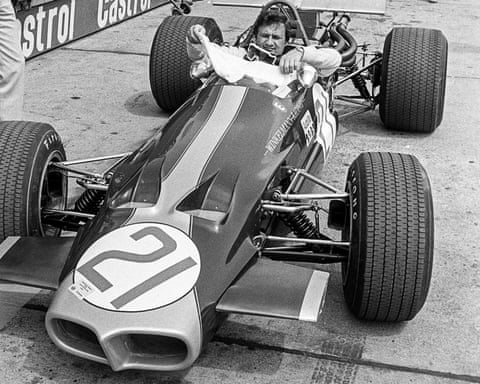
The world of motorsport has lost one of its most resilient and celebrated figures. Hans Herrmann, a driver whose career was defined by both breathtaking victories and miraculous escapes, has passed away at the age of 97.
Herrmann’s final race remains the stuff of legend. In 1970, before heading to the 24 Hours of Le Mans, he made a promise to his wife: a win would mean retirement. At 42, and on his 14th attempt at the grueling French endurance classic, few expected him to have to keep that vow. Yet, in a race marred by torrential rain that saw only a handful of finishers, Herrmann and co-driver Richard Attwood guided their Porsche 917K to a commanding victory, leading for the final half of the event. True to his word, he stepped away from competition.
His path to that triumphant exit was paved with extraordinary skill and sheer fortune. While he competed in 19 Formula One Grands Prix, securing a podium finish in 1954, it was in endurance racing that he truly excelled. His trophy cabinet included wins at the Targa Florio, the 12 Hours of Sebring, and the Daytona 24 Hours.
Herrmann became almost as famous for his survival as for his speed. In a era before routine seatbelts, he walked away from a horrific 180mph crash in the 1959 German Grand Prix after his BRM somersaulted and disintegrated. Another iconic moment came during the 1954 Mille Miglia, where, leading his class in an open Porsche, he encountered a closed railway crossing. With a train approaching, he and his co-driver ducked as the car shot under the lowering barrier—a split-second decision that averted catastrophe.
Born in Stuttgart, Herrmann’s early life was shaped by the Second World War. Drafted as a teenager, he escaped his posting and returned home to begin an apprenticeship as a pastry chef. His racing career began humbly, with a pre-war BMW acquired on the black market. His natural talent behind the wheel of a Porsche 356 soon caught the attention of the factory team, launching a professional journey that would also include a stint with the mighty Mercedes-Benz squad during its postwar return to racing.
After Mercedes withdrew, Herrmann found his greatest successes back with Porsche, becoming a cornerstone of their sports car program through the 1960s. His 1970 Le Mans win was a form of redemption; the previous year, he had been part of the closest finish in the race’s history, losing to Jacky Ickx’s Ford by a mere 120 meters after nearly 5,000 kilometers of racing.
Following his retirement, Herrmann founded a successful automotive accessories company and remained a beloved presence at historic racing events, demonstrating the classic machines that made his name. He is survived by his wife, Magdalena, whom he met through a fellow driver in 1960, their two sons, and a grandson.
Hans Herrmann’s story is not merely one of checkered flags and podium finishes, but a testament to tenacity, courage, and an uncanny ability to cheat fate, securing his legacy as a true giant of endurance racing.