The operating theatre is a place of controlled urgency, but on that Thursday night, it became a scene of relentless horror. As a surgeon who has worked in disaster zones, I have witnessed the aftermath of earthquakes and major accidents. Nothing prepared me for what unfolded in an Iranian hospital when state forces opened fire on their own citizens.
The shift began with a chilling silence—a nationwide communications blackout that severed all contact. Then, the gunfire started. Not the sporadic crackle of earlier clashes, but the sustained, echoing reports of live ammunition on city streets.
The first change was in the wounds. We were no longer treating survivable pellet injuries. The patients now arriving were victims of high-velocity rounds designed for warfare—bullets that tear through the body, leaving catastrophic exit wounds. My specialty is torso trauma, and that night, the operating rooms filled with devastating injuries to the chest and abdomen, where life is measured in minutes and there is no room for error.
The hospital was instantly transformed into a mass casualty zone, overwhelmed and under-resourced. We lacked everything: surgeons, nurses, anaesthesia, blood supplies, and most critically, time. In a facility that typically handles a handful of emergencies overnight, we performed nearly twenty major surgeries in a single, endless shift. Stretchers lined the corridors; as one operation concluded, another began. By morning, some patients from the night before were still on the table.
The scale was incomprehensible. Even in a major disaster, casualties might trickle in over hours. Here, they arrived in a relentless wave—hundreds with severe gunshot trauma over two consecutive nights. The exhaustion was total, a physical and mental collapse. We were surgeons fighting to save lives that had been deliberately targeted, a profound and haunting contradiction.
The sounds from outside the hospital walls told their own story: the distinct, heavy fire of mounted machine guns, weapons of war deployed in urban neighbourhoods. This was not law enforcement; it was an unmistakable military assault.
In the following days, the true scale of the tragedy became clearer through fragments of information. People were too terrified to seek hospital care, knowing that security forces often demand patient records afterwards. My phone, when it briefly had signal, rang constantly with coded calls for help—not just from young protesters, but from teenagers and the elderly, ordinary people caught on the street.
Travelling to another city, I saw the scars of violence: burned metro stations, shattered glass, and streets flowing with traffic and fear. Colleagues there reported identical scenes of medical systems pushed past breaking point, with even private hospitals inundated with gunshot victims.
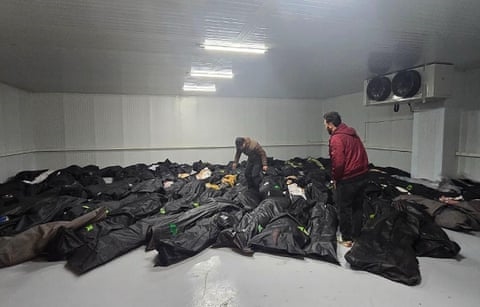
No official tally exists. But based on hospital capacities and the patterns of the wounded and the dead—where a small morgue receives eight bodies instead of one, and medium-sized hospitals take in scores—the numbers are staggering. In one city of two million, the dead from a single night likely exceeded a thousand. Nationally, the figure could be orders of magnitude higher.
The most haunting image was not in the operating room, but on a sidewalk: nearly a litre of blood pooled in a gutter, with a trail stretching metres away. A person who loses that much blood does not make it to a surgeon.
What occurred was a systematic escalation—from individual shots to automatic weapons fire—applying the rules of war to civilian populations. The hospital, a sanctuary, became a place of dread. The full magnitude of those nights—the destruction, the silenced communications, the broken trust—defies description. It was a catastrophe that unfolded largely in the dark, far beyond anything the public has been told.