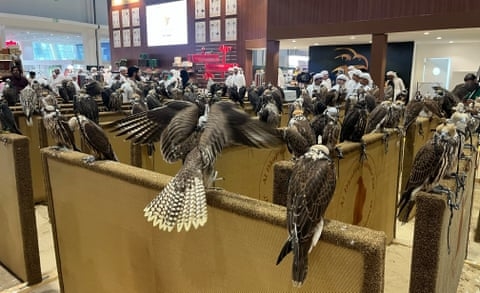
The gleaming exhibition halls of a major hunting and equestrian event in the Gulf present a striking tableau. Here, prized falcons, hooded and perched under spotlights, are displayed as luxury assets. Some command prices exceeding that of high-end automobiles, travel with specialized passports, and receive care in dedicated avian hospitals. This modern spectacle, rooted in ancient tradition, has evolved into a global, multi-million dollar industry. Beneath its polished surface, however, lies a troubling supply chain linked to the illegal trafficking of wild birds from the United Kingdom.
Far from the desert, across rural Britain, a concerning pattern has emerged. Peregrine falcon chicks are disappearing from remote nests on cliffs and treetops, locations accessible only with expert climbing equipment. Investigations indicate that a number of these birds later surface in the Middle East, accompanied by falsified documentation.
British-bred peregrines are particularly sought after. The cool northern European climate is believed to produce robust, swift birds, and established bloodlines carry significant prestige. While trade is legal only for captive-bred birds, with wild peregrines strictly protected, enforcement data suggests a persistent black market.
Exclusive figures indicate that over a recent ten-year period, there were well over one hundred reported incidents of nest raids in the UK, with more than twenty confirmed through evidence such as camera footage or DNA analysis. Authorities believe all are connected to the falcon trade. “We are seeing hundreds of birds go missing annually,” stated a senior wildlife crime official.
Experts point to a dual source of demand driving the illegal take. First, some falconers in the Gulf region seek wild-caught birds for racing, valuing their perceived purity and performance. Second, certain breeding facilities allegedly use wild birds as breeding stock to meet a booming market for hybrids and legally exportable captive-bred offspring.
This demand has precipitated a sharp rise in UK exports. Last year, several thousand peregrines or peregrine hybrids were officially shipped to the Middle East, with the vast majority destined for one Gulf nation. Concurrently, the number of breeding facilities in Britain has grown substantially since the 1980s, with all having commercial links to the region.
The most valuable export is often a specific hybrid, known for its speed. The breeding process creates a high demand for female peregrines, as the hybrid females are infertile. DNA forensic work, relying on samples collected by volunteers from wild populations, has confirmed that some birds within licensed breeding centres were taken from the wild.
Police resources limit comprehensive inspections, but checks conducted in recent years found a significant rate of non-compliance among visited facilities. Offences included unregistered birds, false declarations of parentage, and the possession of illicit wild-caught falcons. During these operations, DNA testing confirmed the wild origin of multiple birds.
The scale of this illicit activity is contested by some within the industry. One consultant, who has supplied falcons to Gulf royalty, argued that illegal taking amounts to only a “handful of birds per year” and that the growth of captive breeding has effectively eliminated the market for wild birds. A representative from an international falconry association dismissed the notion that Gulf falconers actively seek wild-caught British birds, calling such claims unrepresentative and stressing that any illegal activity is not linked to the legitimate falconry community.
For the wild peregrine, the stakes are conservationally significant. Once pushed to the brink of extinction in the UK last century, their recovery is considered a major success story. However, monitors in some regions now report localised declines directly attributed to nest raids. “When they disappear, the food chain gets wrecked,” noted one long-term observer in Scotland, who estimates that approximately one hundred chicks may be taken nationally each year.
A police officer leading the crackdown warned that turning a blind eye to the illegal trade could threaten the species once again. While the overall population remains stable, the targeted theft of chicks, driven by high profits and overseas demand, presents a persistent and damaging challenge to this iconic bird of prey.