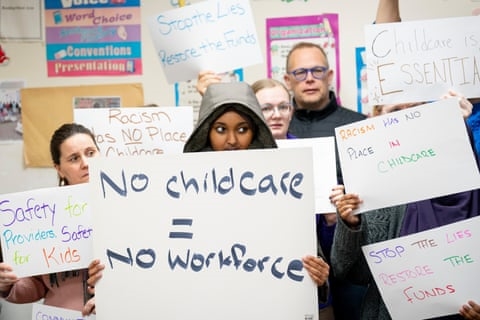
A proposed federal freeze on critical childcare and family assistance funds has ignited a wave of concern across several states, with providers warning of devastating consequences for working families and local economies. The administrative action, which targets billions in aid, is being challenged in court by state officials who deny any wrongdoing.
The potential funding halt affects key programs, including the Child Care and Development Fund and Temporary Assistance for Needy Families, in Minnesota, New York, California, Illinois, and Colorado. Federal authorities cite the need for a review to ensure compliance and guard against misuse of taxpayer money, though specific evidence of fraud within these childcare programs has not been publicly detailed.
For those on the front lines, the uncertainty is creating immediate anxiety. “This is my sole income and my career,” said one provider with decades of experience, echoing sentiments from many who fear closure. “If these funds are frozen, parents will have nowhere to take their children, and people like me will be forced out of work.”
Providers emphasize that the assistance is tied directly to families, not centers, meaning a freeze would cut off access for low-income parents who rely on the subsidies to remain employed. The industry is already grappling with a national shortage of providers and rising costs that outpace inflation, making any disruption potentially catastrophic.
Legal pushback from the impacted states resulted in a temporary court order blocking the freeze earlier this month, with a longer-term injunction being sought. State attorneys general argue the move lacks justification and may violate statutory and constitutional requirements.
The debate unfolds against a backdrop of broader political tensions, with federal officials vowing to root out waste and state leaders decrying the action as unfounded. For childcare workers and the families they serve, the outcome will determine more than just funding—it will shape the stability of communities and the ability of parents to participate in the workforce.