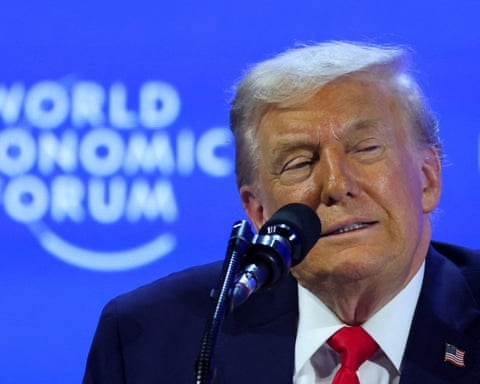
The annual gathering of global leaders in Davos concluded this week, leaving behind a familiar sense of unease. The central figure, once again, was the U.S. President, whose appearance transformed the forum from a policy workshop into a stage for high-stakes political theater.
The primary source of tension was a simmering dispute over Greenland. In the days leading up to the summit, Washington had issued stark demands regarding the territory, rattling its alliance with Denmark and sending shockwaves through the NATO partnership. The prospect of a severe diplomatic—or worse, military—confrontation loomed large.
Therefore, the collective relief was palpable when the President announced a de-escalation, declaring he would not pursue the most aggressive options previously hinted at. The administration framed this as a strategic victory, citing a new understanding that permits an expanded U.S. presence in Greenland while nominally respecting Danish sovereignty.
However, analysts and European officials noted that the specifics of this “deal” remain murky. Critics argue the arrangement closely mirrors long-standing U.S. access rights, suggesting the entire confrontation may have been manufactured. The episode has been interpreted by some as a pressure tactic, designed to keep traditional allies off-balance and assert American primacy on the global stage.
Beyond the Greenland issue, the President’s other diplomatic initiatives met with limited success. His proposal for a new international body to address conflicts garnered little public commitment, particularly after he suggested including leaders currently engaged in active warfare elsewhere.
European leaders, for their part, used the platform to push back. In speeches preceding the U.S. President’s arrival, several warned that current American policy signals a fundamental “rupture” in transatlantic relations, not a simple transition.
The President’s rhetoric during his address did little to assuage these concerns. He repeated unsubstantiated claims about allied commitments, overlooked historical facts about mutual defense, and made repeated geographical gaffes, confusing Greenland with Iceland—errors his staff later attempted to dismiss.
The overarching takeaway from the summit is one of fragile and temporary stability. While the immediate crisis over Greenland was averted, the underlying tensions remain unresolved. Allies are left viewing this outcome not as a resolution, but merely as a pause, bracing for the next unpredictable challenge from a White House that continues to redefine the rules of international engagement.