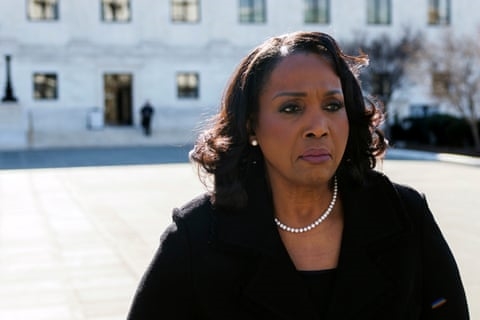
In a pivotal hearing, the U.S. Supreme Court expressed significant doubt regarding a president’s authority to summarily dismiss a sitting governor of the Federal Reserve. The case, which centers on the attempted removal of a Fed board member, has become a critical examination of executive power and the cherished independence of the nation’s central bank.
Justices across the ideological spectrum raised pointed questions about whether a president can fire a Fed official without a clear, formalized process. The proceedings highlighted concerns that establishing such a precedent could destabilize the non-partisan structure of key institutions, with one justice noting it might invite future administrations to remove appointees over minor or unsubstantiated claims.
The controversy stems from an effort last year to oust a governor appointed in 2022, who is the first woman of color to serve on the Fed’s board. The administration cited allegations of discrepancies on mortgage applications, claims the governor’s legal team has characterized as an “inadvertent mistake” and part of a selectively targeted effort. No formal investigation or hearing preceded the removal attempt.
Federal law states that a Fed official may only be removed “for cause,” but the statute does not define that term or outline specific procedures. This legal ambiguity has placed the justices in a position to potentially set a lasting standard for the executive branch’s reach into the traditionally insulated operations of the Federal Reserve.
During oral arguments, multiple justices focused on the importance of the Fed’s operational independence from political pressure. Questions were raised about why no hearing was held to evaluate the allegations and what purpose the Fed’s unique, insulated structure serves within the government. The solicitor general for the administration maintained that adequate process had been followed.
The court’s eventual ruling could range from a narrow decision on procedural grounds to a broader declaration affirming protections for the central bank’s officials. Legal observers suggest the justices may be inclined to reinforce the Fed’s special status, which was designed by Congress over a century ago to shield monetary policy from short-term political influence.
The Federal Reserve, which does not receive direct congressional funding, operates under a dual mandate to manage inflation and maximize employment. Its policy-setting committee meets regularly to determine interest rates. Economists widely agree that a central bank free from political coercion is fundamental to economic stability.
This legal challenge unfolds against a backdrop of public tension between the executive branch and the Fed over interest rate policy. While the central bank has reduced rates several times in the past year, officials have resisted calls for more aggressive cuts, cautioning that other federal policies are contributing to economic uncertainty.
Following the hearing, the Fed governor at the heart of the case issued a statement framing the matter as a fundamental test of whether the Federal Reserve will base its critical decisions on independent analysis and evidence or yield to external pressure.
The Supreme Court’s decision, expected later this term, will delineate the boundaries of presidential authority over one of the nation’s most pivotal economic institutions.