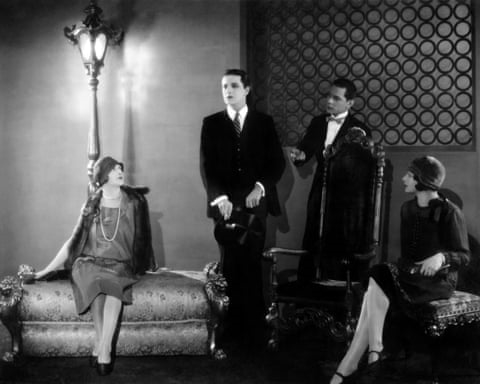
A pioneering silent film has been transformed for the era of the smartphone scroll. A streaming platform has announced it will present Alfred Hitchcock’s 1927 thriller The Lodger in a vertical, episodic format designed for mobile viewing. This move prompts a debate about whether repackaging cinema history for new platforms is a clever adaptation or a step too far.
The platform describes the project as an early example of a classic feature film being entirely reconfigured for vertical, mobile-first consumption. For rights reasons, this particular version will only be available to audiences in the United States. The original film’s nearly square frame will be either extended or cropped to fit the tall, narrow screen of a phone, which will inevitably alter—and often omit—parts of the director’s carefully composed imagery.
Hitchcock himself considered The Lodger the true beginning of his distinctive style, famously stating he aimed to present “ideas in purely visual terms.” The film’s chilling opening, a close-up of a screaming woman, visually telegraphs a city’s panic. Purists argue that compromising such iconic frames fundamentally undermines the work. The full experience is also segmented into chapters, with the complete story requiring a payment, a far cry from the continuous, immersive cinema for which Hitchcock famously advocated.
While the director was no stranger to adapting to new technologies—he directed Britain’s first major talkie and later embraced television—he approached each new format with fresh techniques. This adaptation, however, simply reshapes an existing work rather than creating something new for the medium.
Proponents suggest this approach could introduce classic cinema to a new, digitally-native generation. Yet, skeptics might view it as a provocative stunt, guaranteed to generate discussion and publicity. If the goal is truly to connect modern audiences with film history, some argue for thoughtful remakes of early short films, which were designed for brief runtime, rather than reformatting feature-length classics.
The irony is that The Lodger has never been more accessible. It is available on high-quality home video, through various streaming services, and remains a staple on the big screen in cinemas worldwide, often presented with live musical accompaniment as originally intended.
This digital repackaging arrives amid research suggesting that passive social media scrolling brings little joy and that younger audiences still value traditional film and television. In a twist, some credit social media itself with revitalizing interest in theatrical cinema. Perhaps, by offering a diminished, cropped version of a masterpiece, this experiment will ultimately remind viewers of the irreplaceable power of seeing great films as they were meant to be seen: in full, and on a screen worthy of their vision.