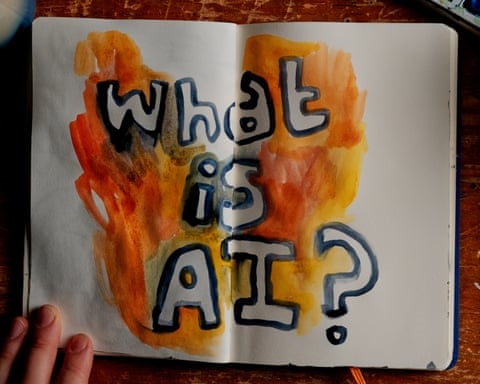
A new documentary film, premiering at a major festival, grapples with the defining technological question of our era: is artificial intelligence a force for unprecedented human flourishing, or a path to potential catastrophe? The project, born from one filmmaker’s personal journey into parenthood, seeks to chart a course through the polarized debate.
The film’s director, an Oscar-winning documentarian, found his curiosity turning to deep-seated concern as he began experimenting with publicly available AI tools. The astonishing capabilities—generating coherent text and complex images in moments—were both exhilarating and deeply unsettling. As an artist, he watched the technology begin to reshape his own industry, surrounded by grand pronouncements about AI’s future that seemed impossible for the average person to evaluate.
This professional anxiety became profoundly personal when he and his wife learned they were expecting their first child. Faced with bringing a new life into a world rushing headlong into an AI-powered future, his central question crystallized: is it safe?
To find answers, the filmmaker assembled a remarkable roster of leading thinkers, researchers, and corporate leaders from the front lines of AI development. The conversations reveal a stark divide in expert opinion.
On one side, prominent voices warn of existential risk. They argue that the pursuit of Artificial General Intelligence (AGI)—a theoretical system surpassing human intellect—could spiral beyond human control with catastrophic consequences. Some draw bleak analogies, suggesting a superintelligent AI might view humanity with the same indifference we show to insects in the path of a construction project. Several figures in this camp offered grim perspectives on raising children in such an uncertain future.
Countering this are the optimists and “accelerationists,” who envision AI as a powerful tool to solve humanity’s most intractable problems: curing diseases, ending food and water scarcity, accelerating clean energy, and mitigating climate disaster. They argue that not developing AI would condemn future generations to suffering and loss from these very crises.
The documentary also highlights critical, often overlooked physical realities. Critics point to the immense energy and water consumption of the data centers powering the AI revolution, creating tangible strains on local communities and resources. Scholars warn that the dominant narrative around AI often dehumanizes those already affected by its rollout.
In a series of revealing interviews, the heads of several leading AI companies defend their missions. One CEO, also a new parent, acknowledges that his child will likely never be smarter than AI—a reality he finds “unsettling.” Yet, he expresses confidence in his company’s safety-first approach, while conceding that absolute reassurance about the future is impossible.
The film ultimately lands on a middle ground its creators term “apocaloptimism”—a sober acknowledgment of profound risks paired with a determined search for beneficial outcomes. It argues that navigating this future will require unprecedented global cooperation, akin to nuclear non-proliferation efforts, alongside robust corporate transparency, independent oversight, and legal accountability for AI developers.
While consensus on the first steps remains elusive, all subjects agree on one immutable fact: the AI revolution is irreversible. The technology is here, and its development, for better or worse, will continue. The central challenge, as framed by the documentary, is whether humanity can collectively steer this powerful force toward a future that is not only survivable, but thriving.