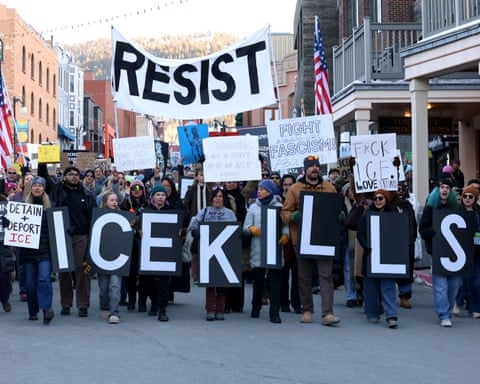
A sense of unease permeated the snowy streets of Park City this week, creating a stark contrast to the usual celebratory buzz of the Sundance Film Festival. As the independent film community gathered to showcase its latest work, the festival’s progressive heart wrestled with grim news unfolding beyond the mountain resort.
The catalyst was a shooting in Minneapolis, where federal immigration agents killed Alex Pretti, a 37-year-old nurse. The incident, part of a broader government crackdown, sent shockwaves through the festival, forcing attendees to reconcile their artistic pursuits with a national climate of escalating tension.
“We’re here to honor beautiful, hopeful stories,” remarked filmmaker Olivia Wilde at a premiere, “but the world is hurting right now. What’s happening is appalling.” Her sentiment echoed a widespread, conflicted mood. While some participants wore protest pins and conversations in screening Q&As turned to current events, the festival’s relentless schedule of parties and premieres often continued, business-as-usual.
This dissonance highlighted a complex moment for Hollywood’s political engagement. Compared to the vocal, unified outcry seen during a previous administration, the response felt more fragmented. “It’s hard to be here in nice outfits talking about film when something so ugly is happening,” noted actor Jenna Ortega, capturing the ambivalence.
Sundance has never shied from politics, serving as a vital platform for documentaries tackling social issues. This year’s lineup was no exception, with films exploring themes of authoritarianism and resilience. At the premiere of a documentary about Salman Rushdie’s attack, the author himself reflected, “Maybe all of us now are feeling the risk of violence… that danger is just around the corner.”
Direct action within the festival grounds was more subdued than in past years, though not absent. A rally dubbed “Sundancers Melt ICE” drew a crowd, including actor Elijah Wood, who stated the festival was about “bringing people together.” A larger march followed, with protesters chanting for the abolition of Immigration and Customs Enforcement.
For many, the political reckoning happened in quieter spaces: panel discussions on democracy, or private conversations about the “current moment.” Filmmaker Kogonada urged audiences to see cinema as an “empathizing machine,” a necessary counterbalance to world events.
As the festival passed its midpoint, the atmosphere remained one of somber determination. “It’s impossible not to talk about the brutality and how it has to stop,” said actor Natalie Portman. She acknowledged the painful backdrop, but also pointed to a “beautiful community” of Americans showing up for one another. The celebration of art, it seemed, was now inextricably linked to a national struggle, making the act of gathering both a refuge and a form of quiet resistance.