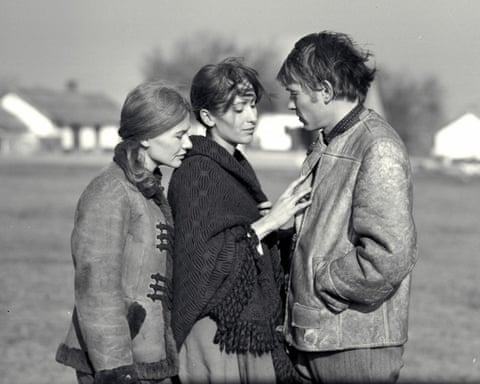
A stark and unsettling cinematic vision unfolds on the vast, wind-swept Hungarian plain. This is the setting for a 1968 film that is less a conventional narrative and more a hypnotic, psychological ballet, meditating on the lingering trauma of a nation’s violent past.
The story is set in the turbulent aftermath of the First World War, following the collapse of the short-lived Hungarian Soviet Republic. A fugitive soldier, István, seeks refuge on a remote farm run by two sisters, Teréz and Anna. Their isolated existence is poisoned by a dark secret: they are slowly murdering Teréz’s husband and his elderly mother. The atmosphere is thick with tension, a shared madness born from fear and seclusion.
The local authority is represented by an army officer, Kémeri, who is aware of István’s presence. His inaction appears to be purchased through implied intimacies with the women and a soldier’s reluctant respect for István’s wartime record. Yet, the true weight of oppression is felt through the arrival of secret police, who move through the landscape like a plague.
Their methods are rituals of humiliation and control. Civilians are forced into degrading physical punishments. In one particularly chilling sequence, locals are compelled to handle the personal effects of men killed by the authorities, then pose for photographs—a grotesque pantomime designed to implicate them in the crime and break their spirit. The line between the silenced and those who cry out is erased; oppression renders them identical.
The film’s visual language is as distinctive as its mood. The camera glides in elegant, unbroken takes across the endless plain, treating the landscape as a vast, open-air stage. Characters don’t simply enter a scene; they emerge like specters from the distant horizon or dwindle into specks as they depart, emphasizing their insignificance against the forces of history and the unforgiving land.
While István’s moral dilemma—how to expose the murders without condemning himself—provides a thread of plot, it is not the core. The film is primarily an immersive experience, a meditation on the psychological miasma left by political violence. It captures the erotic charge of power, the absurdity of authoritarian rituals, and the deep, strange trauma that settles over a people, as persistent and desolate as the wind on the plain.