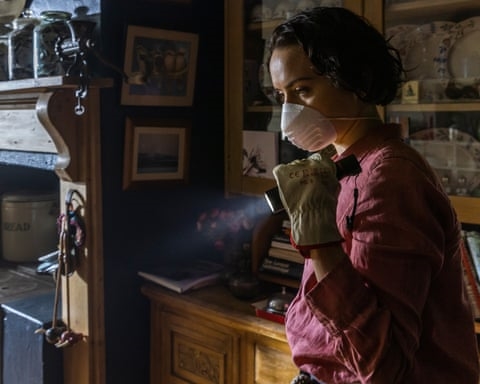
The zombie film, a genre as enduring as its shambling subjects, continues to demand fresh perspectives. The latest to answer the call is We Bury the Dead, a survival tale that distinguishes itself not through relentless gore, but through a quieter, more melancholic focus on loss.
The story begins with a catastrophic military accident in Tasmania, claiming hundreds of thousands of lives. Into this devastated landscape arrives Ava (Daisy Ridley), an American woman who has lost her husband. She joins a volunteer recovery team, ostensibly to help, but is privately determined to venture into the restricted, fire-ravaged zones to find his remains. Her mission is complicated by local resentment and the emergence of a bizarre phenomenon: some of the deceased are beginning to stir.
Rather than descending into panic, the film treats these reanimations with a curious, almost clinical detachment. The true horror here is not the nascent zombie threat, but the profound weight of grief. Ava’s journey is an internal one, her search driven by a desperate need for closure in a suddenly incomprehensible world. The question of what she might find—and in what state—hangs over every step.
Daisy Ridley delivers a powerfully restrained performance, conveying volumes through silence and expression. She grounds the film in a palpable, human sadness, making Ava’s emotional stakes far more compelling than the occasional scenes of undead agitation. The director showcases a strong visual eye, framing the Australian wilderness with a stark beauty that contrasts with the grim task at hand.
While the narrative’s final act may not break entirely new ground for the genre, and some tonal shifts feel uneven, the film’s commitment to its core theme is commendable. In a field often crowded with empty spectacle, We Bury the Dead offers a thoughtful, character-driven exploration of mourning, proving that sometimes the most haunting thing left in the wake of an apocalypse is a broken heart.