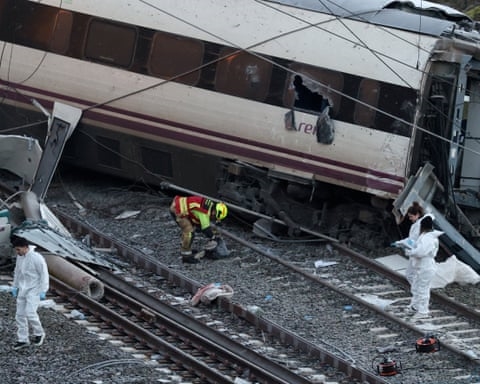
Investigators probing the catastrophic train collision in southern Spain that claimed 45 lives are focusing on the possibility that a pre-existing fracture in a section of rail triggered the disaster.
The accident occurred near the town of Adamuz in the Andalusia region. An Iryo high-speed train derailed and collided with an oncoming Renfe high-speed service. A preliminary technical report has identified damage to the wheels on the right side of the Iryo train’s leading carriages, which is consistent with striking a fractured rail.
The report outlines a scenario where a broken rail, bearing the full weight of a passing wheel, could sag and create a momentary step at the fracture point. This step would then impact the wheel rim. Based on current evidence, the investigation commission has put forward the working hypothesis that this rail fracture existed before the Iryo train reached the location, precipitating the derailment. Officials emphasize this is a provisional finding pending further analysis.
This tragedy was followed just two days later by another serious rail incident in Catalonia, where a collapsing wall caused a derailment that killed the driver and injured 37 people. In response to these consecutive disasters, Spain’s main train drivers’ union has announced a three-day strike scheduled for next month. The union states the action is necessary to compel authorities to restore and guarantee safety standards across the rail network for both workers and passengers.
The accidents have ignited a fierce political debate, with opposition parties criticizing the government’s handling of the crisis and alleging a lack of transparency. The leader of the conservative opposition framed the railway’s condition as symptomatic of broader national failures under the current administration.
The official investigation continues as authorities work to determine the definitive cause of the derailment.