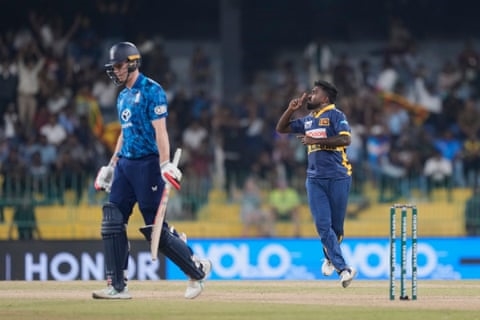
England’s one-day international side suffered another away defeat, extending a troubling losing streak on foreign soil. The loss in the opening match of the series against Sri Lanka has cast a fresh spotlight on persistent selection puzzles and the structural challenges plaguing the domestic game.
The decision to recall Zak Crawley to the top of the order, after an absence of over two years from the 50-over format, raised immediate questions. His brief innings ended in a manner familiar to followers of the Test side, dismissed by a clever piece of bowling. His reintroduction, reuniting him with Ben Duckett, seemed particularly curious given their recent struggles as a partnership in the longest format.
This selection, however, points to a much broader issue. For players like Crawley, considered among the country’s most dynamic strikers, opportunities to play meaningful domestic 50-over cricket have virtually disappeared. The schedule now sidelines the One-Day Cup, pushing it to the margins while the spotlight falls on franchise tournaments. Consequently, selectors are increasingly forced to rely on instinct and performances in other formats when assembling their ODI squad, a precarious method for building a consistent side.
When questioned about the criteria for picking ODI openers in this environment, the white-ball captain emphasized that “runs are your currency,” suggesting that scoring heavily in any competition could force selection. Yet this logic appears at odds with Crawley’s recall, given his acknowledged inconsistency and a first-class average that has remained modest for an extended period. His case was bolstered primarily by a strong 2025 campaign in short-form franchise cricket, rather than any recent evidence in the 50-over game he was selected to play.
There remains an undeniable allure to Crawley’s game—his technique and ability to dominate bowling when set are compelling. However, England’s past ODI dominance was built on openers who delivered not just style but substance: high averages and consistent match-winning centuries at a rapid pace. The current search for a reliable formula at the top continues.
A lone positive from the defeat was Duckett’s gritty half-century, a resilient knock against high-quality spin that broke a personal run of low scores. His proven pedigree in this format serves as a reminder of the value of extensive experience in 50-over cricket, a foundation increasingly difficult for the next generation to build.
Ultimately, the match result and the narrative around the team’s composition underscore a significant dilemma. As the domestic pathway for one-day cricket erodes, the national selectors are left navigating with an incomplete map, making decisions based on fragmented evidence from other formats. This structural weakness, as much as any on-field performance, continues to hinder England’s progress in ODI cricket.