A controversial medical study, funded by the United States and led by Danish researchers, has been suspended in Guinea-Bissau following a review by the West African nation’s new health authorities. The decision underscores a growing assertion of national sovereignty over foreign-led research and has sparked a diplomatic dispute with U.S. health officials.
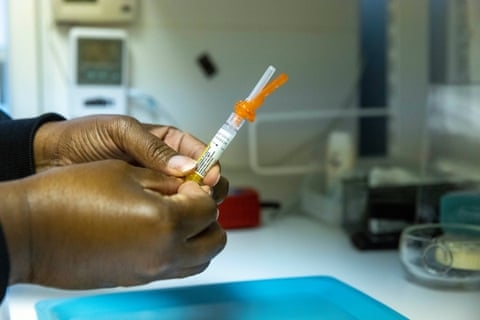
The study aimed to investigate the health effects of administering the hepatitis B vaccine to newborns. The proposed design involved giving the vaccine to 7,000 infants at birth while withholding it from another 7,000 until they reached six weeks of age. This approach raised significant ethical concerns, as the World Health Organization recommends the hepatitis B vaccine be given to all newborns within 24 hours of birth to prevent severe illness.
Guinea-Bissau’s recently appointed Minister of Health, Dr. Quinhin Nantote, confirmed the pause, stating the scientific basis for the trial had not been adequately reviewed. The nation, which faces profound healthcare challenges, currently administers the vaccine at six weeks but plans to align with global standards by 2028.
“The decision rests with the sovereignty of the country,” stated Dr. Jean Kaseya, Director-General of the Africa Centres for Disease Control and Prevention (Africa CDC), who is supporting Guinea-Bissau’s review. He emphasized that the choice to proceed must be made by national authorities, not international bodies.
This assertion of autonomy has been met with sharp pushback from the U.S. Department of Health and Human Services (HHS). An HHS spokesperson insisted the trial would proceed as planned and dismissed the Africa CDC’s announcements as a “public-relations campaign.” The spokesperson further questioned the organization’s credibility, a characterization strongly rejected by African health leaders who pointed to the Africa CDC’s critical role in managing continental health crises.
Health experts have criticized the study’s design. “To prevent historical ethical violations, the control group must receive the current standard of care,” argued Dr. Abdulhammad Babatunde, a global health researcher based in Nigeria. “Withholding a proven, life-saving vaccine from newborns when it is available is unacceptable. Research must address Africa’s priorities, not foreign curiosity.”
The suspension also calls into question the study’s initial ethical approvals. While an early version received clearance from a national ethics committee in Guinea-Bissau, subsequent significant modifications were reportedly made without further review. Furthermore, it appears the researchers did not seek ethical approval from boards in their home countries of Denmark and the United States, a standard requirement under international research guidelines.
The situation highlights the complex power dynamics in global health research. Analysts note that nations with fewer resources can face immense pressure to accept foreign studies. “The most important voice is that of Guinea-Bissau’s ministry of health, which is responsible for protecting its citizens,” said Gavin Yamey, a professor of global health. The current review, supported by the Africa CDC, represents a pivotal moment for the nation to define the terms of research conducted on its soil.
As Guinea-Bissau’s health ministry reassesses the study with international support, the standoff marks a significant moment in the ongoing debate over equity, ethics, and self-determination in international medical research.