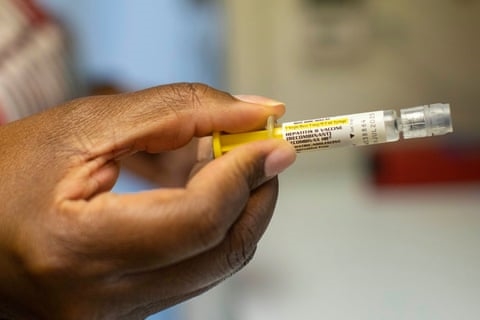
A major medical research initiative in Guinea-Bissau, funded by the United States, has been terminated following widespread condemnation over its ethical design. The study, which involved withholding a proven hepatitis B vaccine from a control group of newborns, was canceled after intervention from the Africa Centres for Disease Control and Prevention (Africa CDC).
The $1.6 million project, authorized under the U.S. Department of Health and Human Services, aimed to enroll approximately 14,000 infants. Half would receive the hepatitis B vaccine at birth, while the other half would not, despite the vaccine’s established efficacy in preventing a disease that poses a significant public health threat in the region. Critics argued the design knowingly deprived vulnerable children of a life-saving intervention for the sake of research.
A senior Africa CDC official confirmed the cancellation, stating the study’s protocol presented a “big challenge” and did not conform to established ethical norms for medical trials. While discussions about a potential redesigned study may continue, the official emphasized that any future research must fully address these ethical violations before proceeding.
Public health experts have hailed the decision as a critical victory for research ethics and advocacy. One prominent infectious disease specialist condemned the original plan, comparing it to historically exploitative studies and stating it treated African children as less valuable. The specialist argued the funds should instead be used to vaccinate as many newborns as possible.
The controversy centers on a disputed hypothesis by the study’s lead researchers, who have suggested that some vaccines, like the one for hepatitis B, might interfere with broader, non-specific immune benefits they attribute to other childhood inoculations. This theory, which remains highly contested within the scientific community, formed the rationale for testing the delayed administration of the hepatitis B vaccine.
Critics counter that conducting such a trial in a resource-limited setting like Guinea-Bissau, where access to the vaccine is currently constrained, exploits a public health gap rather than solving it. They stress that while more clinical research led by African scientists is needed on the continent, it must be designed to answer locally relevant questions without compromising patient care.
Guinea-Bissau, which has a high prevalence of hepatitis B, currently recommends the vaccine for infants at six weeks old due to supply limitations, with plans to offer it at birth starting in 2027. The now-canceled study was scheduled to begin earlier this month, prior to the widespread rollout.
The decision to halt the project marks a significant moment for institutional oversight in global health, demonstrating increased scrutiny of international research partnerships to prevent the exploitation of vulnerable populations.