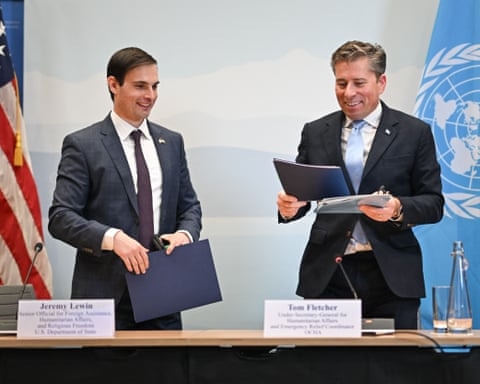
A new $2 billion humanitarian aid pledge from the United States is generating significant concern among analysts, who warn the funding comes with stringent conditions that could reshape international relief efforts to align with Washington’s political agenda.
While the financial commitment provides some relief following widespread global aid cuts, experts point to the detailed stipulations accompanying the announcement. The funds are to be channeled exclusively through a single United Nations emergency coordination fund and are restricted to a pre-selected list of 17 countries.
Notably absent from the U.S. priority list are nations experiencing severe crises, such as Afghanistan and Yemen. The designated countries include Sudan, Haiti, the Democratic Republic of the Congo, and several in Latin America—regions where the U.S. maintains distinct strategic interests.
Independent analysts argue that pre-selecting recipient countries solidifies a shrunken, less flexible humanitarian system. They express alarm that this approach could prevent a coordinated UN response to unforeseen emergencies in non-prioritized regions next year.
Further criticism centers on the substantial reduction in funding compared to previous years and the overarching political narrative. The pledge was framed alongside demands for the UN to streamline operations and eliminate perceived inefficiencies, with one official stating international bodies must “adapt, shrink or die.”
Some observers interpret the move to funnel money through a single UN office not as enhanced partnership, but as an effort to centralize control and simplify the imposition of U.S. directives on aid distribution. Skepticism remains regarding whether the full amount will be delivered if the UN fails to meet Washington’s expectations for administrative reforms.
The announcement has sparked a debate about the future of multilateral humanitarian action, with critics contending it risks subordinating neutral, needs-based aid to the donor’s foreign policy objectives.