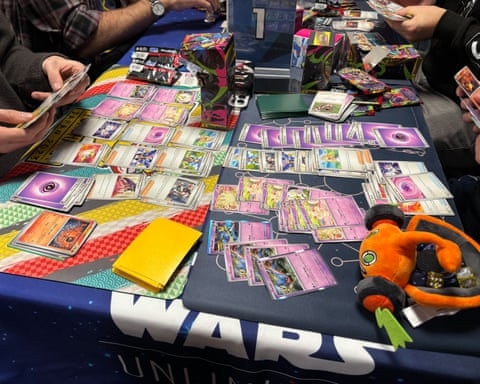
A once-childhood pastime has transformed into a high-stakes financial market, creating an unexpected crisis for its original audience. The Pokémon Trading Card Game (TCG), a staple for over two decades, is now gripped by a speculative bubble that has made basic products nearly unobtainable for young fans, while adults treat booster packs like volatile stocks.
The core issue is a perfect storm of scarcity, social media hype, and rampant reselling. New card sets sell out instantly, not to collectors or players, but to individuals and groups—often called scalpers—who buy in bulk solely to flip sealed products for profit. This has created a secondary market where brand-new, unreleased cards are assigned values in the hundreds of pounds before they even hit store shelves. With a retail pack costing a few pounds but holding the potential for a card worth hundreds, the incentive for speculative buying is immense.
The consequences are stark. Major online retailers have been forced to implement lottery systems for purchases. Physically, stories abound of adults queuing for hours, aggressively clearing store shelves, and even engaging in threatening behavior toward shop staff to secure inventory. This environment has pushed many local game stores to limit purchases per customer or stop selling sealed boxes altogether to protect their community and discourage hostile scenes.
Social media influencers have amplified the problem. Videos showcasing rapid pack openings, with exaggerated reactions to high-value “hits,” promote a distorted narrative. They frame the hobby not as a game of strategy or collection for enjoyment, but as a get-rich-quick scheme. This content drives demand from viewers who invest significant sums chasing similar luck, often without understanding the low odds or the substantial capital behind the influencers’ own openings.
This frenzy has birthed a mini-economy complete with portfolio-tracking apps, a booming card-grading industry, and conventions where single trades can reach five figures. It has also led to fraudulent practices, including the sale of counterfeit cards and the resealing of packs after valuable cards have been removed.
Parents report a frustrating and expensive hunt to find cards for their children, who themselves become acutely aware of monetary “value” over playful utility. The manufacturer, despite producing cards in the billions annually, has acknowledged ongoing struggles to meet unprecedented demand.
However, there are indications the bubble may be deflating. Prices for some older sets are softening as supply improves, and the frantic intensity has slightly eased. Industry observers note a cyclical pattern, with a potential lull before the next major promotional event sparks another surge.
Amid the chaos, some retailers are choosing a different path. Rejecting the temptation to inflate prices alongside the market, they prioritize selling at recommended retail prices to serve their local player base. Their bet is that when the speculative fever breaks, customer loyalty built on fairness will prove more valuable than short-term profits. For now, the playground staple remains trapped in a grown-up game of financial speculation, leaving the next generation of fans largely on the sidelines.