For a certain type of player, a video game isn’t truly compelling unless it feels, at first, utterly impossible. While many find satisfaction in gradual progression or relaxing routines, others are wired to seek out titles designed to break their spirit. Their obsession isn’t with accumulation, but with conquest.
This drive often manifests early. For some, it begins with the relentless pursuit of perfection in rhythm games, replaying tracks dozens of times in solitary, determined sessions until every note is flawless. The appeal isn’t the music alone; it’s the battle against a preset challenge, a test of personal discipline against a digital standard.
That pursuit finds its purest expression in a specific genre of modern gaming, one synonymous with formidable difficulty. These are worlds where death is a constant teacher, progress is measured in inches, and every victory is hard-won. Their design philosophy rejects hand-holding, instead creating intricate, punishing ecosystems that demand patience, observation, and resilience. Success here feels less like winning and more like a profound personal achievement, often forged through shared community knowledge and collective struggle.
This tenacity, while occasionally frustrating to onlookers, can translate beyond the screen. The stubborn refusal to yield in the face of a complex problem is a trait applicable to creative pursuits, professional hurdles, and learning new skills. Yet, in gaming, this trait finds its most absurd and captivating playgrounds.
Consider the experience of a game built around a single, agonizingly precise mechanic: walking. One misstep can undo an hour of painstaking effort, trapping players in ludicrous predicaments for entire evenings. The game seems to mock the player, daring them to quit by placing an easy exit right next to its most infamous challenge. To persevere is to engage in a private war of attrition, where the eventual breakthrough delivers a surge of triumph that rationalizes the preceding hours of frustration.
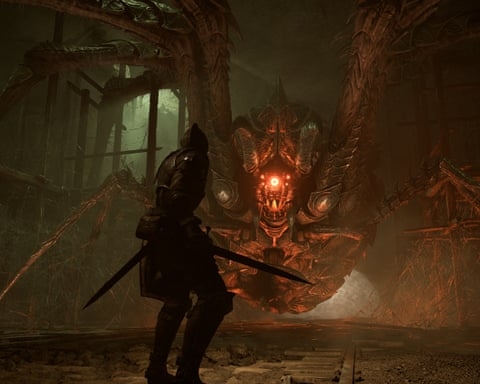
Other titles master a different kind of balance, weaving beautiful, expansive worlds with challenges that walk a razor’s edge between fair and ferocious. They feature adversaries that demand not just quick reflexes, but deep study and adaptation, turning each boss encounter into a grueling final exam. The journey to even reach these battles can be an ordeal, ensuring players arrive with nerves already frayed. Yet, for some, this layered adversity only fuels a fiercer determination to succeed.
This appetite for difficulty represents a significant counter-current in game design. For years, the trend leaned toward accessible, open experiences that minimized player frustration. But the sustained popularity of demanding games proves a substantial audience exists for whom the struggle is not a barrier, but the primary attraction. They are drawn to the mastery of systems that, in the grand scheme, have no real-world utility.
Perhaps therein lies the core appeal. Life is inherently unpredictable and often unconquerable. Setbacks are frequent, and control is an illusion. A meticulously difficult game, by contrast, presents a challenge that is finite, knowable, and, with enough perseverance, always surmountable. It offers a rare space where effort and tenacity are guaranteed, eventually, to be rewarded. In a world of chaos, there is a peculiar comfort in a wall you can, with enough bloody-minded determination, finally break through.