In a world where powerful leaders increasingly act with brazen disregard for established norms, a recent verdict stands as a stark and isolated exception. The International Criminal Court has sentenced a Sudanese militia commander to two decades in prison for war crimes and crimes against humanity committed in Darfur two decades ago. This conviction, while a significant legal milestone, underscores a troubling global reality: for every perpetrator brought to justice, many more operate under a pervasive shield of impunity.
The defendant, Ali Muhammad Ali Abd-al-Rahman, known as Ali Kushayb, was a senior figure in the Janjaweed militias, which were mobilized by the Sudanese government. His sentencing marks the first conviction for the atrocities in Darfur, a region once more engulfed in violence due to the country’s ongoing civil war. Notably, the ICC’s arrest warrants for former Sudanese President Omar al-Bashir and former minister Ahmad Harun remain unexecuted, with both men having long dismissed the charges against them as politically motivated interference.
This pattern of denial and evasion is not confined to Sudan. It reflects a broader, corrosive trend where state leaders and high officials openly flout international law, confident they will never face consequences. They dismiss allegations of atrocities as necessary duties or legitimate acts of defense, insulating themselves from accountability. This emboldened stance is now visible in multiple global crises, where actions that would once have prompted universal condemnation are instead met with defiant justification.
In one conflict, a national leader, himself embroiled in domestic legal troubles, has overseen a military campaign that has drawn accusations of grave breaches of international law from global bodies. Rather than engage with these charges, his strategy involves seeking political protection abroad and resisting independent investigations at home, all while the humanitarian toll of the warfare continues to mount under his authority.
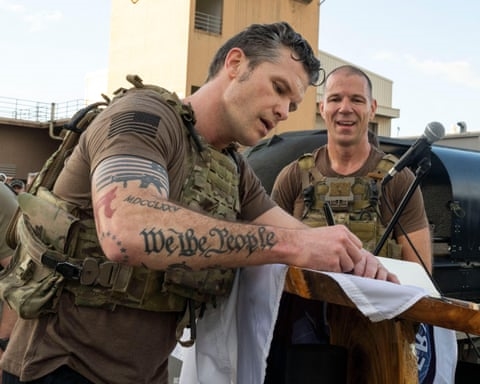
Elsewhere, a top defense official from a major power has publicly endorsed lethal military actions against civilian vessels on dubious pretexts, framing extrajudicial killings as a lawful and desirable policy. This stance has received explicit backing from the nation’s highest political office, which has declared such operations acceptable regardless of legal scrutiny. The message is unambiguous: might makes right, and established rules are optional for those with sufficient power.
This erosion of legal standards creates a dangerous precedent. When the world’s most powerful nations act as if they are above the law, it signals that the foundational principles restraining state violence are negotiable. It normalizes a form of international anarchy where force is justified by the actor alone, mirroring the behavior of non-state militant groups and undermining the very concept of a rules-based order.
The consequence is a climate where other leaders facing international warrants feel equally untouchable. They observe that political alliances can be leveraged to obstruct justice and that powerful patrons are willing to attack the institutions designed to uphold accountability. The question then becomes not only about individual guilt but about the survival of the international legal framework itself.
The conviction of a single militia leader in The Hague is a hard-won victory for justice. Yet it shines a light on a landscape increasingly dominated by those who operate without fear. The central challenge of our time is whether this system of accountability can withstand the assault from those who believe their power places them beyond its reach. The rule of law is not dying quietly in a courtroom; it is being actively challenged in war zones and in the halls of power by leaders who smirk at its very notion.