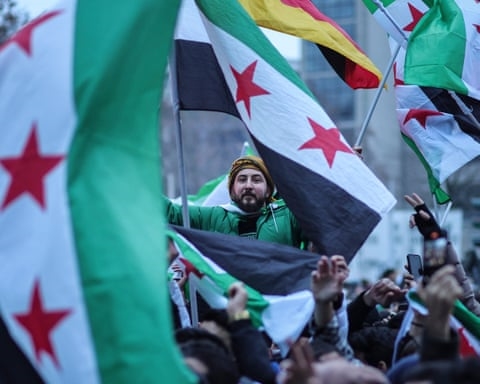
A year after the collapse of the Syrian government, a new uncertainty grips the hundreds of thousands of Syrians who rebuilt their lives abroad. As Western nations reassess their asylum policies, many refugees now face the prospect of being compelled to return to a homeland still reeling from devastation.
The shift in policy has been swift. Following the change in Damascus, several European governments moved to suspend new asylum applications for Syrians and announced reviews of existing protections. This pivot has instilled deep anxiety within refugee communities who had believed their sanctuary was secure.
In Austria, where tens of thousands of Syrians reside, authorities have prepared plans for what they term “orderly repatriation.” For individuals like Abdulhkeem Alshater, who leads a Syrian community organization, the reversal feels like a betrayal. “It creates significant fear,” he stated, noting the mental health toll on a population that had invested years in integration, from learning the language to establishing careers and families.
The political calculus is clear in nations like Germany, which hosts the largest Syrian diaspora in Europe. Chancellor Friedrich Merz has publicly stated that grounds for asylum have expired and that voluntary returns should begin, with deportations as a next step for those who refuse. This stance has sparked debate, as industry groups highlight the critical role Syrian workers play in alleviating severe labor shortages in healthcare, engineering, and childcare. A recent economic study warned that the departure of thousands of Syrian medical professionals alone could create critical gaps in the German health system.
The threat of return dominates daily conversations. Anas Alakkad, an entrepreneur who trains migrants for Germany’s job market, reports widespread frustration. New arrivals question whether it is worth learning German or starting a business, while families remain separated due to suspended reunification programs. “They don’t know if they will be able to get residency, or if they can ever bring their families here,” Alakkad explained.
For many, the joy of the regime’s fall is tempered by the grim reality on the ground in Syria. A recent World Bank report estimated reconstruction costs at over $200 billion, describing the challenge as “immense.” Basic infrastructure for electricity and clean water remains severely damaged, and sporadic violence continues. Activist Ahed Festuk, who visited Syria recently, argues that a sudden, large-scale return of refugees would overwhelm the fragile state. “The home has been destroyed completely,” she said. “To add millions of people right now would be really challenging.”
Despite the destruction, a desire to return eventually persists. UN surveys indicate over 80% of refugees hope to go back one day, and an estimated one million people have already returned from neighboring countries like Turkey in the past year. Migration researcher M. Murat Erdoğan notes that many who returned from Turkey did so voluntarily, feeling “relatively ready.” However, he cautions that for others who have started businesses and put down roots, leaving their host countries “will not be easy.”
The debate has also highlighted stories of successful integration, now overshadowed by political rhetoric. Ryyan Alshebl, elected mayor of a small German town in 2023, represents this achievement. He warns that creating an expectation of mass return is “dangerous” and could fuel political extremism if not met. He proposes a middle path: allowing well-integrated Syrians who contribute to society to stay, while clearly defining the future for those who cannot gain a foothold. “Germany needs these people,” Alshebl argued, framing it not as benevolence but as a pragmatic arrangement.
As nations grapple with post-conflict policy, the lives of Syrian refugees hang in the balance, caught between a homeland not yet ready to receive them and host countries increasingly reluctant to let them stay.