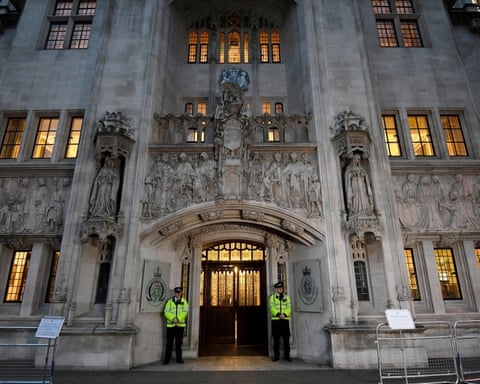
Bahrain is set to argue before the United Kingdom’s highest court that it is protected by sovereign immunity from legal claims alleging it used spyware to monitor two exiled dissidents in London.
The Gulf state has already had its immunity claim rejected by both the High Court and the Court of Appeal. Its decision to pursue the matter at the Supreme Court underscores the significant reputational stakes involved. A ruling in Bahrain’s favor could establish a precedent affecting how foreign governments use digital surveillance tools against political opponents residing in the UK.
The hearing, scheduled to begin this week, will not determine the truth of the allegations but will decide whether the case for damages can proceed at all, based on Bahrain’s immunity defense.
The claimants, Dr. Saeed Shehabi and Moosa Mohammed, allege that Bahraini authorities used FinFisher surveillance software—developed in Germany—to infiltrate their computers while they were in London, causing them psychological harm. Last October, the Court of Appeal upheld a lower court ruling that the UK’s State Immunity Act of 1978 does not grant Bahrain immunity in this instance.
The court determined that the remote hacking of a computer physically located in the UK constitutes an “act” within the country, regardless of where the operators were based. It also ruled that the legal definition of “personal injury” under the act includes psychiatric harm.
While Bahrain denies the spying allegations, a High Court judge previously found, based on expert evidence, that the claimants had sufficiently demonstrated it was probable their devices were infected by Bahraini agents. The Supreme Court’s decision on immunity will determine if this finding can be tested in a full trial.
Shehabi, a co-founder of the dissolved opposition party Al-Wefaq, stated the legal proceedings have sent “a clear message to foreign governments” about pursuing opponents through intrusion into private lives. Mohammed, who left Bahrain in 2006 after repeated detentions, said he has a duty to expose the alleged hacking, which he described as having a “devastating” impact on himself and his associates.
Both men have had their Bahraini citizenship revoked.
Legal representatives for the claimants noted the case raises fundamental questions about accountability for the use of intrusive surveillance technology against activists and could provide long-awaited clarity for many affected individuals.