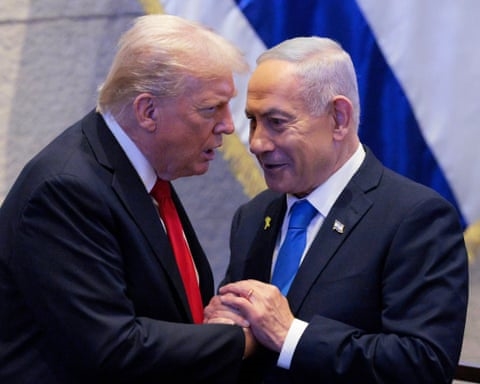
The United States has placed three judges from the International Criminal Court (ICC) on its sanctions list, a move that starkly illustrates the selective application of international law. These judges, including French magistrate Nicolas Guillou, now find themselves formally categorized alongside designated terrorists and narcotics traffickers, facing severe personal and professional restrictions. Their transgression? Authorizing arrest warrants for senior Israeli officials over alleged war crimes in Gaza.
Washington’s justification—that the court is engaging in “illegitimate and baseless actions” against a close ally—lays bare a foundational principle of modern geopolitics: the rules-based system is not intended to constrain its principal architects or their partners. This was underscored by a prominent U.S. senator who bluntly stated the ICC was “made for Africa and thugs,” not for allied democracies. The U.S., which never ratified the court’s founding treaty, now joins nations like China and Russia in actively undermining its authority.
The judges’ decision followed a protracted legal review. The warrants for Israeli leaders cited, in part, their own public statements regarding the imposition of a “complete siege” on Gaza and the blocking of humanitarian aid. Notably, assessments from within the U.S. government itself have concluded that Israel intentionally obstructed aid, a finding that under American law should trigger an arms embargo—a statute the administration has ignored.
This episode transcends a bilateral dispute. It represents a direct assault on judicial independence and the principle that law should be applied impartially. Other Western nations, including ICC member states like Italy and France, have followed the U.S. lead by offering assurances to Israeli officials that they would not face arrest, thereby neutering the court’s authority. France’s failure to defend its own citizen, Judge Guillou, for performing his sworn duties is a particularly telling abandonment of liberal precepts.
The ramifications are global. For much of the world, the spectacle of Western powers shielding allies from accountability while lecturing others on human rights eviscerates any remaining moral credibility. This pattern is not new. The illegal invasion of Iraq two decades ago, justified by a similar contempt for international legal frameworks, eroded Western authority and set precedents for later aggression elsewhere. The current campaign against the ICC is another step in that corrosive process, signaling that for the powerful, the law remains optional.
The international legal architecture was historically shaped by Western interests. That a nation like South Africa can now bring a case of genocide against a key Western ally before the International Court of Justice, and garner significant global support, marks a shift. The attempt to sanction ICC judges for doing their jobs is a reaction to this changing landscape. It is an act of political coercion, not legal argument, and it ultimately accelerates the very decline of influence it seeks to prevent. By demonstrating that rules apply only to the powerless, the guardians of the old order are ensuring its collapse.