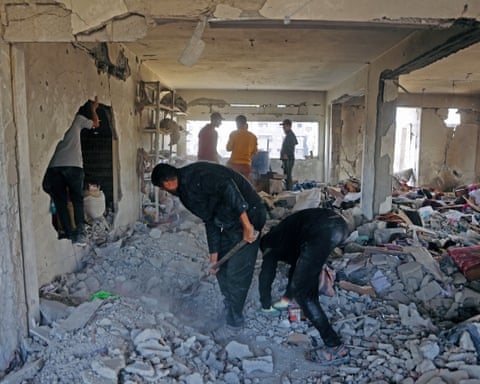
A new wave of Israeli airstrikes across the Gaza Strip has resulted in significant casualties, marking a severe intensification of hostilities and casting doubt on the durability of a recently established truce.
Medical sources in Gaza report that 33 people were killed in separate strikes on Thursday. In the southern area of Khan Younis, local hospitals received the bodies of 17 individuals, among them several women and children, following attacks on encampments housing displaced families. Further north in Gaza City, airstrikes claimed 16 more lives.
The Israeli military stated the operations were a response to its forces coming under fire in the Khan Younis area, though it reported no injuries among its personnel. The armed wing of Hamas denied initiating any attack and condemned the strikes as a brutal assault.
For residents, the violence signals a grim return to a state of war many feared had never truly ended. “We try to grasp at hope, and then the bombing starts again,” said one woman from eastern Gaza City, describing a night of fear for her family. A displaced man living in a coastal tent community echoed the sentiment, stating that while the scale of death may have lessened, the daily reality of casualties, destruction, and severe deprivation persists unchanged.
The latest bloodshed has drawn sharp international criticism. Qatar, a principal mediator in the conflict, denounced the strikes as a dangerous escalation that threatens the ceasefire agreement. The violence comes amid ongoing diplomatic efforts to solidify a longer-term plan for the territory, including proposals for an international security presence.
Significant obstacles to a lasting peace remain unresolved. Key questions surround the disarmament of militant groups, the composition and mandate of any proposed peacekeeping force, and the mechanism for delivering comprehensive humanitarian aid while current restrictions remain largely in place.
The conflict, now in its third year, began with a large-scale cross-border attack by Hamas-led fighters into Israel. The ensuing Israeli military campaign has resulted in a high Palestinian death toll, with health authorities reporting over 300 fatalities since the ceasefire began, alongside the unresolved issue of hostages and missing persons.
This flare-up in Gaza was accompanied by heightened tensions on another front, as Israeli aircraft conducted strikes in southern Lebanon, following a deadly attack on a Palestinian refugee camp there earlier in the week.
The renewed fighting underscores the fragile nature of the current calm and the profound challenges facing efforts to move from a temporary halt in violence to a sustainable resolution.