A profound sense of optimism has long been projected for Africa, anchored in its youthful population, vast natural resources, and accelerating technological adoption. Economic forecasts paint a picture of a continent on the cusp of transformative growth. Yet this promising trajectory faces a formidable obstacle: a widespread and deepening crisis of governance.
Recent analyses indicate a troubling regression in political freedoms and security across numerous nations. The trend is not confined to regions of open warfare; it is increasingly visible in countries once considered stable. The mechanisms of democratic erosion are familiar: the marginalization of political opposition, the manipulation of electoral bodies, and the deployment of state security forces to suppress dissent. Experts warn that without accountable leadership, the continent’s economic ambitions are built on unstable ground.
Nowhere is this reversal more striking than in Tanzania. For decades, the nation stood as an exemplar of post-colonial cohesion and calm. The peaceful transition of power to Samia Suluhu Hassan in 2021 was hailed as a new chapter, sparking hopes of political liberalization after a period of heightened authoritarian control. Initial gestures, including the reopening of shuttered media outlets, suggested a commitment to reform.
Those hopes have been decisively shattered. The recent electoral process marked a dramatic descent into overt autocracy. Leading opposition candidates were systematically barred from competing through arrests and bureaucratic disqualifications. On voting day, authorities severed internet connectivity, heavily militarized urban centers, and obstructed independent monitoring.
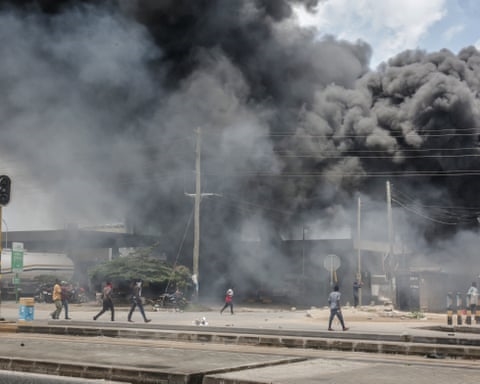
The official result, awarding the incumbent an overwhelming and statistically dubious victory, was swiftly condemned by regional observer missions and civil society as fundamentally flawed. The aftermath has been characterized by severe violence. Protests in major cities were met with lethal force by security personnel. Reports from hospitals and morgues, corroborated by humanitarian groups, suggest a death toll reaching into the hundreds, possibly thousands, starkly contradicting government denials.
A climate of fear has been cemented through enforced disappearances and targeted killings. Several prominent activists and opposition figures have been abducted or found dead under brutal circumstances. Credible allegations point to the existence of mass graves intended to conceal the true scale of the crackdown. The government continues to dismiss all accusations, despite substantial visual evidence circulating internationally.
Tanzania’s fall from grace carries significant regional implications. Once a bastion of stability and a historic haven for liberation movements, it now mirrors the repressive regimes it once opposed. Its decline serves as a potent warning for neighboring states.
In Uganda, a protracted presidency shows no sign of relinquishing power, stifling the aspirations of a overwhelmingly young populace. Meanwhile, catastrophic conflicts in Sudan and the Democratic Republic of Congo, fueled by resource competition and foreign interference, continue to devastate lives and destabilize entire regions. These wars actively destroy the social and institutional foundations necessary for sustainable development.
The juxtaposition is clear: the narrative of “Africa Rising” cannot be sustained amidst widespread repression and conflict. For the continent’s economic potential to be realized, its foundational principles of human dignity and political freedom must be secured. The international community, alongside regional bodies, faces a critical test. There is an urgent need for independent investigations into atrocities and sustained pressure on governments to uphold their democratic commitments.
The future of Africa ultimately depends on its leaders recognizing that true prosperity is inseparable from liberty. The energy and talent of the continent’s youth, its greatest asset, must be matched by their right to participate freely and safely in the political life of their nations. Without this, the century ahead will not belong to its people. The tragedy unfolding in Tanzania is not an isolated incident; it is a battle in the continent’s ongoing struggle for the soul of its governance.