A new analysis of international climate funding has found that significant sums intended to combat global warming are flowing not only to the world’s most vulnerable nations but also to economically powerful countries, including major fossil fuel producers.
The review of recent financial data submitted to the United Nations, alongside records from the Organisation for Economic Cooperation and Development (OECD), indicates that while a system exists to transfer funds from wealthy polluters to developing countries, its distribution lacks central oversight. This allows donor nations considerable discretion, leading to allocations that may reflect political interests rather than prioritizing areas of greatest need.
A key finding is that only approximately one-fifth of the climate finance committed in 2021 and 2022 reached the world’s 44 least developed countries (LDCs). Much of this funding arrived as loans, not grants, raising concerns about deepening debt burdens for nations already facing severe economic strain. For some LDCs, such as Bangladesh and Angola, loans constituted over 95% of their received climate finance.
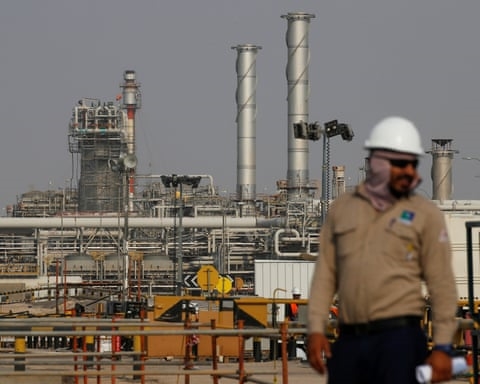
The analysis further identifies that substantial funding was directed to upper-middle-income nations and major economies. China, the world’s second-largest economy, received billions in climate finance, primarily from multilateral development banks. Similarly, wealthy petrostates like the United Arab Emirates and Saudi Arabia were listed as recipients of large climate loans from other developed nations, earmarked for projects ranging from electricity grids to solar farms.
This distribution highlights a growing tension in global climate negotiations regarding the classification of “developing” countries. Many nations now categorized as developing, including several with high per-capita incomes and carbon footprints, were designated as such over three decades ago. Critics argue this outdated framework allows economically advanced countries to avoid greater financial responsibilities while still qualifying to receive support.
Finance experts warn that the heavy reliance on loans, even concessional ones, risks exacerbating financial crises in poor nations. Data indicates that over a recent two-year period, the poorest countries collectively repaid nearly three times more in external debt than they received in climate finance. This dynamic prompts concerns that new climate loans may simply service old debts rather than fund transformative, growth-enhancing projects.
The findings emerge as the international community negotiates a new, significantly higher climate finance goal to replace the longstanding $100 billion annual target. There is increasing consensus among advocates and UN officials that the system requires urgent reform to ensure finance is accessible, affordable, and equitable. Proposals include expanding grant-based funding, implementing innovative mechanisms like fossil fuel taxes, and revising the terms of climate-related debt to prevent worsening the fiscal health of vulnerable states.