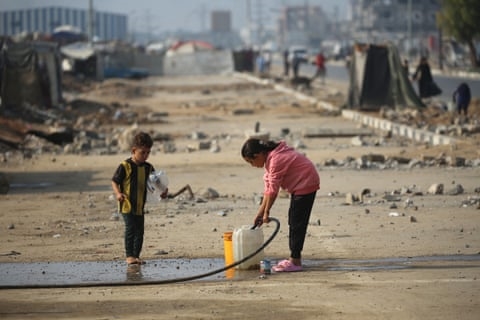
A new report reveals a sharp and concerning global increase in violent incidents targeting water infrastructure and those seeking access to it, with occupied Palestinian territories emerging as a primary focal point of sustained assaults.
According to data compiled by a leading water policy research organization, there have been more than 250 documented attacks on Palestinian water sources over a five-year period. These incidents, attributed to both military forces and civilian settlers, represent what analysts describe as the most prolonged offensive against civilian water supplies in recent memory. The tactics employed range from the use of explosives and heavy machinery to the contamination of wells and the deployment of attack dogs against civilians at water collection points.
The consequences in Gaza have been particularly devastating. Reports indicate that approximately 90% of water and sanitation facilities in the territory have been either destroyed, severely damaged, or rendered inaccessible due to military blockades. This systematic degradation of water infrastructure has precipitated a severe public health crisis. United Nations experts have repeatedly warned that the denial of clean water constitutes a violation of international humanitarian law, with some officials alleging it forms part of a broader strategy of collective punishment.
The pattern extends beyond Gaza. In the occupied West Bank, incidents involving the destruction of irrigation pipelines and community water sources by settlers are frequently reported. One such attack in the village of Bardalah saw vital irrigation lines on Palestinian farmland deliberately severed.
This trend is part of a wider, alarming global escalation. Worldwide, the number of water-related conflicts reached a record high last year, with over 420 incidents—a significant jump from previous years. The first half of the current year alone has seen more than 160 additional attacks documented. This violence encompasses the bombing of dams and treatment plants, assaults on water utility workers, and the weaponization of water access in armed conflicts.
Recent examples are stark. In Ukraine, cities like Kalush have been left without water following shelling, while there are reports of water being cut off to civilian homes in occupied regions as a punitive measure. In South Asia, protests over water allocation from major rivers have turned violent. Meanwhile, in regions like Latin America, environmental activists defending local water resources face growing threats.
The research underscores that access to safe water is a fundamental human right recognized under international law. Deliberately attacking water systems or denying populations access to them is considered a war crime. Experts warn that as climate change exacerbates water scarcity and geopolitical tensions rise, the incentive to target this essential resource is likely to increase.
“The rising tide of violence tied to water security is a flashing red light for the international community,” stated a senior analyst involved with the report. “Protecting civilian water infrastructure isn’t just a humanitarian issue; it’s a critical foundation for preventing conflict and instability. Upholding the laws of war to safeguard these systems is now more urgent than ever.”
The data, drawn from a comprehensive chronology that tracks water conflicts back thousands of years, shows a dramatic uptick in incidents over the past two decades. From just two dozen globally reported events at the turn of the millennium, the scale has expanded exponentially, highlighting water’s emerging role as both a casualty and a catalyst of contemporary conflict.