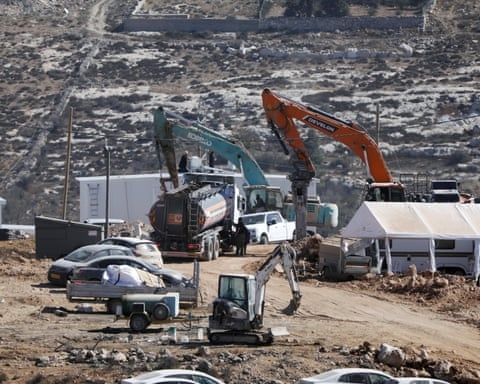
The Dutch government is continuing to develop a legal framework to prohibit imports originating from Israeli settlements in occupied Palestinian territories. This targeted measure, confirmed by the country’s foreign minister during a regional visit, proceeds even as broader European sanctions initiatives against Israel have been temporarily paused following recent ceasefire developments in Gaza.
The foreign minister stated the import ban is a direct response to ongoing settlement expansion and escalating violence against Palestinian communities in the West Bank, actions which he said undermine the prospects for a two-state solution. He emphasized a current desire to support peace efforts while simultaneously signaling that destabilizing actions in the occupied territories would not be ignored.
The Netherlands joins a growing list of European Union members addressing trade with settlements. Several other EU nations have already enacted or are drafting similar bans, with some also reducing consular services for settlers. The Dutch minister acknowledged the legislative complexity, noting that national trade policy is largely governed by EU regulations, requiring the creation of a new legal precedent.
This push occurs against a backdrop of increased violence in the West Bank and legislative moves within Israel. Recent months have seen a record number of attacks against Palestinians and their property, according to United Nations data. Meanwhile, the Israeli parliament has advanced a controversial bill seen as a step toward formal annexation of the territory, a move opposed by several international actors.
The impetus for these European measures stems in part from a landmark ruling by the International Court of Justice, which declared Israel’s occupation illegal and called for its swift end. The court also outlined obligations for other states to avoid supporting or recognizing the occupation as lawful.
While the economic impact of banning settlement goods is considered minor relative to total EU-Israel trade, analysts view it as a significant political statement. It reflects a growing European consensus against policies that threaten the viability of a future Palestinian state. Historically a strong ally of Israel, the Netherlands earlier this year spearheaded an unprecedented review of the EU’s overarching trade agreement with Israel, which concluded that Israel had breached its human rights commitments.
Advocates for stronger action argue that a ban on settlement trade should be part of a broader package of measures. Such a package could include suspending preferential trade terms for Israel, imposing sanctions on specific Israeli officials, and restricting access to European research funds. They contend that a unified European approach is necessary to effectively leverage its considerable economic influence and challenge a perceived culture of impunity.
The broader EU sanctions package, proposed after the trade agreement review, remains a possibility, having been shelved but not abandoned following the recent ceasefire. The debate continues among European diplomats, with many urging a more decisive response to ongoing violations of international law in both Gaza and the West Bank.