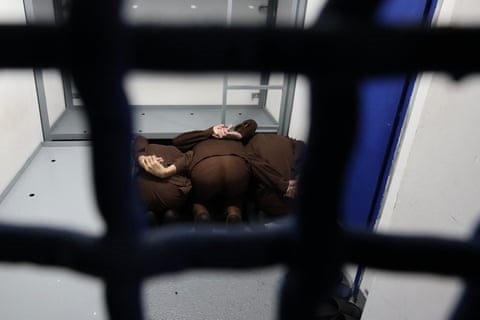
Dozens of Palestinian detainees from Gaza are being held in a long-shuttered underground Israeli prison, where they are subjected to months of total isolation from natural light, inadequate food, and no contact with the outside world, according to information from legal representatives.
The facility, known as Rakefet, was originally built in the 1980s to incarcerate a small number of high-risk criminals but was closed shortly thereafter after being deemed inhumane. It was reopened under orders from Israel’s far-right National Security Minister following the October 2023 attacks.
Lawyers from an Israeli human rights organization who recently visited the site described a grim subterranean complex. Detainees, including civilians such as a nurse and a teenage food vendor, are held in windowless cells with poor ventilation. They report regular physical abuse, denial of medical care, and starvation-level rations. Their only “yard” time consists of a few minutes every other day in a small, enclosed underground space.
One detainee, a 34-year-old nurse and father of three, has not seen daylight since his transfer to Rakefet in January. He has received no news of his family’s fate since his detention began in late 2023. A second detainee, an 18-year-old trader, was held for nine months before being released as part of a recent ceasefire agreement.
During legal visits, which are conducted under heavy surveillance, guards reportedly cut short conversations if detainees ask about their families or the war. Lawyers described being led down dirty stairs to a room with a filthy, unusable toilet, a setting they called humiliating to the legal profession.
Medical and psychological experts warn that prolonged deprivation of daylight severely disrupts basic biological functions, including sleep cycles and vitamin D production, and has devastating effects on mental health. A former head of the Israeli Prison Service from the 1980s wrote that holding anyone underground around the clock was “too cruel” and inhumane to endure, regardless of their alleged crimes.
While Israeli officials have stated the prison was reopened to hold high-level militants, data indicates the majority of Palestinians detained from Gaza during the recent conflict were civilians. The Israeli Prison Service stated it operates according to the law but declined to comment on the specific status of prisoners at Rakefet or the conditions described.
Human rights advocates argue that holding detainees under these conditions, especially after the formal end of major hostilities, violates international law and constitutes a form of torture. They note that despite a large prisoner release in October, hundreds of Gazans remain in indefinite detention without charge.