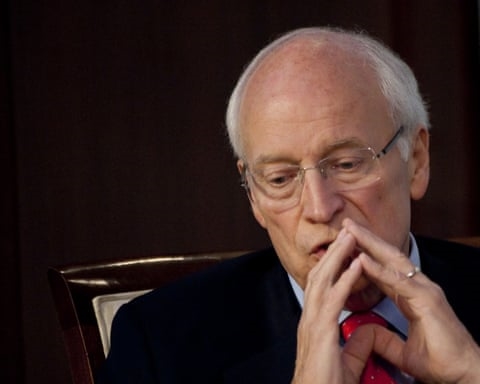
Dick Cheney, a central and formidable figure in American politics for decades, has died at the age of 84. His family confirmed his passing.
Cheney’s career spanned multiple administrations, holding key roles including White House Chief of Staff, Congressman, Secretary of Defense, and ultimately Vice President under George W. Bush. He was widely regarded as one of the most powerful individuals to ever hold the vice presidency, exercising significant influence over national security policy.
His tenure was irrevocably shaped by the terrorist attacks of September 11, 2001. With President Bush being moved to a secure location, Cheney helped direct the immediate response from Washington. This event set the course for the remainder of his time in office, leading to the U.S.-led invasions of Afghanistan and, most consequentially, Iraq.
The 2003 invasion of Iraq, predicated on intelligence that later proved faulty regarding weapons of mass destruction and ties to al-Qaeda, defines a major part of Cheney’s legacy. He remained a steadfast advocate for the war and the broader “war on terror,” including the use of enhanced interrogation techniques on detainees—methods widely condemned as torture. The conflicts initiated during this period resulted in significant loss of life across several nations.
A Wyoming native, Cheney’s path to power was unconventional. He dropped out of Yale University and received deferments during the Vietnam War, yet rose rapidly through Republican ranks. His political journey included serving under Presidents Richard Nixon, Gerald Ford, Ronald Reagan, and George H.W. Bush before being selected as vice-presidential candidate in 2000.
His personal life was not without incident, most notably a 2006 hunting accident in which he accidentally shot a companion.
In later years, Cheney broke with much of his party over its direction. He publicly rebuked former President Donald Trump following the January 6, 2021, attack on the U.S. Capitol, an event he attended a memorial for alongside his daughter, former Congresswoman Liz Cheney. In 2024, he announced he would vote for Democrat Kamala Harris for president, calling Trump the “greatest threat to our republic” in the nation’s history.
Cheney, who survived multiple heart attacks long before entering the vice presidency, often embraced a stern public persona, earning the nickname “Darth Vader” from critics and allies alike—a moniker he was reported to appreciate. He leaves behind a legacy as a pivotal, deeply consequential, and perpetually debated architect of early 21st-century American foreign policy.