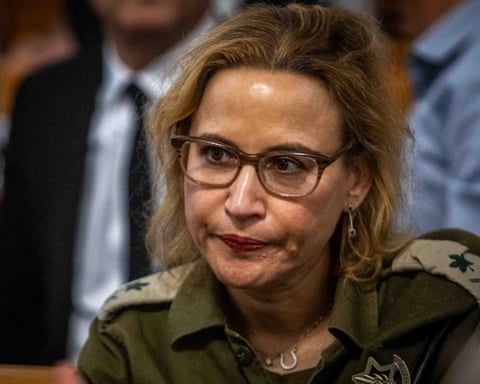
The former chief legal officer of the Israeli military has been taken into police custody following her admission that she authorized the release of a controversial video. The footage allegedly shows soldiers assaulting a Palestinian detainee.
Yifat Tomer-Yerushalmi, who resigned from her post as Military Advocate General last week, is reportedly under investigation on multiple charges. These include fraud, breach of trust, abuse of office, and obstruction of justice related to the disclosure of the sensitive material.
In her resignation letter, Tomer-Yerushalmi stated she approved the video’s release to counter what she described as a false narrative targeting military legal authorities. The leak occurred after significant public pressure, including protests where demonstrators, including some lawmakers, entered a military base to demand an end to the related investigation.
The case stems from a July 2024 raid on the Sde Teiman detention facility, where 11 soldiers were detained for questioning. They were suspected in a violent attack on a detainee from Gaza, who sustained serious injuries. Following the investigation, five soldiers were charged with aggravated abuse and causing serious bodily harm.
The government and prominent figures on the political right have strongly criticized Tomer-Yerushalmi’s actions. They have argued that pursuing the case and releasing the video damaged Israel’s international reputation, framing the legal process as an attack on the state itself. Following her resignation, she faced intense public criticism and personal threats.
This development has sparked a broader debate about legal accountability and the rule of law. Analysts note that the military legal system has historically been viewed by many as a shield against international war crimes tribunals, demonstrating Israel’s capacity to self-investigate. However, observers suggest that even this pragmatic function is now being challenged, reflecting a shift in attitudes toward international legal norms during the ongoing conflict.
The incident highlights the tensions between military justice procedures and political narratives. It also raises questions about the mechanisms for investigating allegations of misconduct by security forces, particularly in a highly polarized climate.