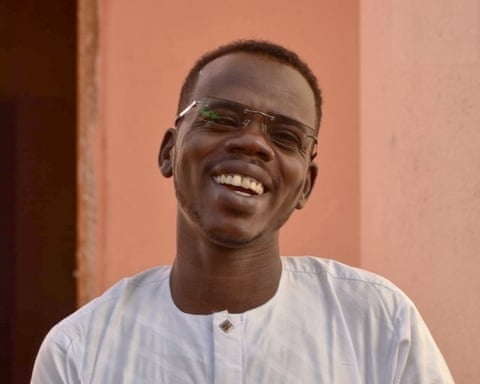
For months, as the paramilitary Rapid Support Forces tightened their siege around the Darfuri city of El Fasher, they had a specific target in mind. Among the trapped civilians, they repeatedly inquired about the whereabouts of one man, Mohamed Khamis Douda, circulating threats against his life. Douda, a prominent community figure and activist, had become a crucial conduit of information from inside the besieged city, detailing the unfolding humanitarian catastrophe. He remained, even as conditions grew desperate, determined to bear witness. His efforts ended on October 26, when RSF fighters finally overran the city. Douda was killed, his death confirming widespread fears that activists and civil society leaders are being systematically targeted.
Douda had previously served as a spokesperson for the Zamzam displacement camp, placing him at the heart of a massive crisis. Injured during an RSF massacre at Zamzam earlier this year, he was evacuated to El Fasher, only to find himself trapped in another impending disaster. From there, he chronicled a daily existence defined by deprivation and terror.
Life under siege was a grim cycle. Each day began with the relentless struggle to find food. Supplies of grain vanished, forcing residents to resort to ombaz—a peanut-processing residue typically used as animal feed—ground into a crude paste. As even that ran out, people turned to boiling cattle hides. Survival was paired with constant aerial threat; the glow of a cigarette or a sudden movement could draw attack from drones circling overhead. Nights were spent in stifling, makeshift shelters buried in the ground, listening to the buzz of drones and the thunder of shelling.
Despite the personal danger, Douda worked to support his community, helping to distribute scarce resources, document abuses, and organize burials for the dead. He believed this activism, particularly his reporting on foreign mercenaries fighting alongside the RSF, made him a marked man. In messages, he described how RSF checkpoints were showing his photograph to those fleeing, asking if he was still in the city. “I hear that the RSF are trying to find me because I speak out against them,” he wrote. “Every day, they get closer.”
His final communications painted a picture of a city in its death throes. Movement became impossible, with drones striking anyone seen outside. Community kitchens shut down as volunteers could no longer risk the journey. “I spend all my time thinking about how I can escape,” he said, “but as much as I try, I cannot work out how.”
The fall of El Fasher was followed by reports of targeted arrests and killings, including that of a former parliamentarian who had helped run food kitchens. Human rights groups warn of a coordinated campaign to eliminate civil society voices. Douda’s death is seen as a profound blow, the silencing of a courageous witness who sacrificed his safety to alert the world.
“This is the loss of an entire generation,” said one analyst focused on atrocity prevention, noting reports that the RSF possesses lists of activists to target. “He was one of the true heroes of this war, and his voice was crucial. Now it is gone.”