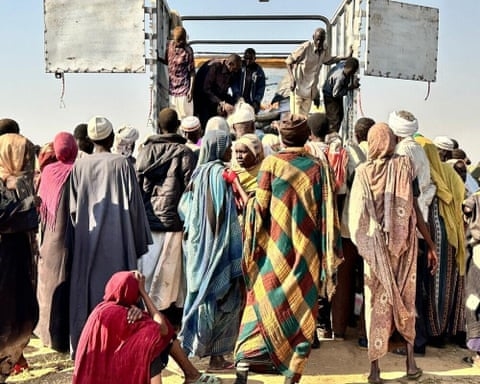
The capture of the Sudanese city of El Fasher by the paramilitary Rapid Support Forces (RSF) has unleashed a wave of violence bearing a grim and familiar signature. Emerging accounts describe a systematic campaign of brutality: mass killings at hospitals, the execution of unarmed men, and the looting and extortion of fleeing civilians, with perpetrators often documenting their own crimes.
This is not an isolated outbreak. It follows a documented pattern of RSF-led atrocities. In 2023, similar operations in Geneina, West Darfur, resulted in the deaths of thousands from the Masalit community. Earlier this year, a massacre at the Zamzam camp for displaced persons claimed over 1,500 lives. In each instance, the tactics have been consistent, leading observers to warn that the assault on El Fasher, under siege for 18 months, was a preordained catastrophe.
The broader conflict erupted in April 2023 from a power struggle between Sudan’s national army and the RSF. The war has since spiraled into what is widely considered the world’s most severe humanitarian crisis, displacing millions and pushing half the population toward famine. Throughout, the RSF has been repeatedly accused of ethnically motivated violence in the Darfur region.
International bodies have taken note. A deputy prosecutor at the International Criminal Court has stated that war crimes and crimes against humanity are ongoing in Darfur, while a UN expert panel recently concluded that both warring parties have committed such acts. The United States has formally accused the RSF of genocide.
Despite a proposed international roadmap for peace and a humanitarian truce, these measures collapsed as the RSF advanced on El Fasher. Critics argue the international response has been characterized by foreknowledge without consequential action. “This was predicted and predictable,” stated one expert on mass atrocities. “I don’t think that there can be a head of state or a foreign minister who wasn’t warned.”
The historical parallels are stark. Analysts see echoes of the 1994 genocide in Rwanda and the civil wars in Liberia, where resource competition fueled violence. The RSF itself has roots in the Janjaweed militias implicated in the Darfur genocide of the early 2000s, with a veteran commander convicted of crimes against humanity just this month.
Much of the evidence from El Fasher comes from the fighters themselves, who circulate graphic videos of executions online. Analysts interpret this as a deliberate tactic of psychological warfare and intimidation, driven by ethnic animus. These videos, alongside satellite imagery analyzed by research groups, have corroborated reports of systematic killings at multiple sites, including hospitals.
While the RSF leader has pledged to hold violators accountable, a severe communications blackout has descended on El Fasher, obscuring the fate of hundreds of thousands of civilians. The paramilitary force’s next potential target is feared to be the city of El Obeid.
Experts assert that halting the violence requires tangible international pressure, particularly on nations accused of supplying the warring parties. Calls have grown for “meaningful, swift and really painful sanctions” against external backers, moving beyond statements of condemnation to actions that could alter the conflict’s calculus. For now, the grim pattern continues, witnessed by the world and etched into Sudan’s landscape of suffering.