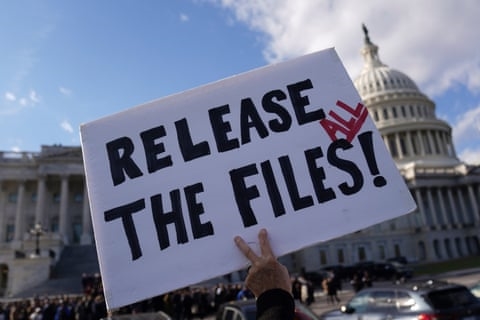
The U.S. Department of Justice has announced a new delay in the public release of documents related to the Jeffrey Epstein case. Officials stated that federal prosecutors and the FBI have identified over one million additional records requiring review, pushing the timeline for full disclosure back by “a few more weeks.”
This update follows criticism for missing a congressionally mandated deadline of December 19th for the complete release of files. In a public statement, the Justice Department attributed the delay to the “mass volume” of newly uncovered material. It emphasized that a team of lawyers is working to review the documents and make legally required redactions, primarily to protect the identities of victims.
The disclosure process has already resulted in the release of hundreds of thousands of pages across several batches. The most recent release included approximately 30,000 records, which contained new references to former President Donald Trump. Among the documents was a 2020 email from a federal prosecutor noting that Trump had traveled on Epstein’s private jet more frequently than previously known.
However, officials have also warned that the trove includes fabricated materials. They specifically identified a forged letter purportedly from Epstein to convicted sex offender Larry Nassar and a fake video depicting Epstein’s death. Authorities stressed that the inclusion of such items is a procedural requirement and does not validate their content.
Some of the newly released files offer glimpses into the FBI’s investigative work, including a partially redacted list of potential “co-conspirators” identified following Epstein’s 2019 arrest. While most names were obscured, the unredacted portions named Ghislaine Maxwell, the late model agent Jean-Luc Brunel, and billionaire businessman Leslie Wexner. A representative for Wexner reiterated his prior cooperation with investigators and denial of any involvement in criminal activity.
The continued delays have drawn bipartisan political pressure. Lawmakers from both parties have threatened contempt proceedings against the Attorney General for failing to meet the statutory deadline, underscoring the intense public and congressional demand for transparency surrounding the long-running investigation.