A growing community of Mauritanian immigrants in Ohio is living under the constant threat of deportation, fearing a return to a homeland where human rights abuses and systemic discrimination are widespread.
Khalidou Sy, a musician now living in Lockland, a village north of Cincinnati, knows the dangers firsthand. Before leaving Mauritania, he was arrested and jailed for five days after a performance where he criticized the government. He describes a society marked by severe segregation and racism. “Life there was very rough,” he says.
His journey to the United States in 2023 was harrowing, involving a 15-day trek through Central America. His family’s bus was stopped and robbed by an armed gang in Mexico, though he managed to hide their savings. Now, like thousands of others, he has built a new life in Ohio, only to find it imperiled by a renewed immigration crackdown.
This community, though small compared to other immigrant groups in the U.S., has grown significantly in recent years. Thousands have undertaken a dangerous and expensive route—often via Turkey, Colombia, and the Darién Gap—to seek asylum at the U.S.-Mexico border. Many have settled in the Cincinnati area, drawn by affordable housing and entry-level jobs.
Their arrival has not been without local friction. Reports of overcrowded housing and strains on municipal services in Lockland have fueled criticism, some of which has been amplified by national media outlets. This scrutiny has placed the community directly in the crosshairs of federal immigration enforcement.
Currently, U.S. immigration courts have over 19,000 pending cases for Mauritanian nationals, the second-highest number from any African nation. Since the start of the year, enforcement actions have led to the deportation of dozens back to Mauritania.
For many, deportation is not merely a matter of relocation but of safety. A significant portion of Ohio’s Mauritanian community belongs to the Fulani ethnic group and the country’s Black population, which has long faced persecution under a minority Arab-Berber government. Mauritania was the world’s last country to officially abolish slavery, and the practice is believed to persist.
“I don’t know any Black person who wants to live in a country that resembles apartheid-era South Africa, where slavery is still a reality,” says Amadou Ly of the Mauritanian Network for Human Rights in the U.S. “That is the main reason people do not want to be sent back.”
The threat is a daily reality. One local volunteer, Demba, recounts how a friend was detained by immigration authorities immediately after a mandatory check-in in Cleveland and deported to Senegal.
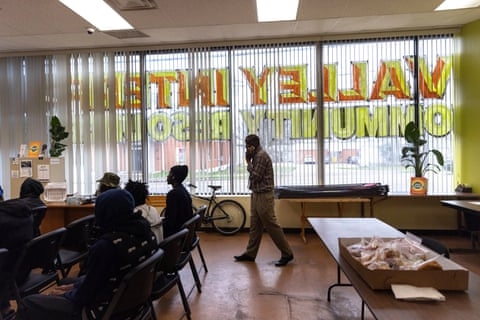
Community support networks have emerged to help newcomers navigate life in America. Vincent Wilson, who runs a bicycle workshop in Lockland, estimates his group has provided bikes to hundreds of Mauritanian immigrants to aid their mobility. While many have since obtained work permits, bought cars, and found stable employment, anxiety persists.
“The biggest thing we’ve seen is people going to court appearances in Cleveland and getting detained there,” Wilson notes. He knows individuals currently jailed on minor traffic violations who now face likely deportation.
Cultural adjustment has also been a challenge. Sy acknowledges that early tensions arose as new arrivals learned local social norms. “You can’t come to somebody’s country and do reckless things,” he states, but believes the situation has improved significantly as the community has integrated.
Despite building stable lives, their legal limbo continues. Sy applied for asylum over a year ago and still awaits a decision. His next routine check-in with immigration authorities could end with his removal.
“I wish it would never happen,” he says, “but you never know.” For him and thousands of others in Ohio, the safety they have found remains frighteningly fragile.