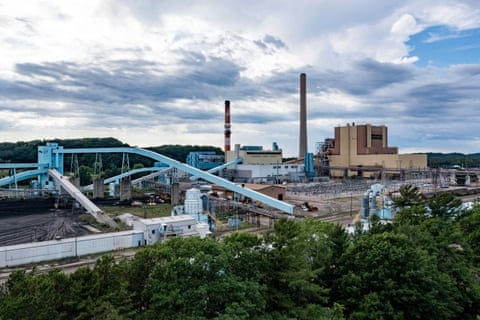
A federal directive to maintain operations at an obsolete coal-fired power plant in western Michigan has saddled utility customers across the Midwest with over $113 million in costs, according to financial estimates from the facility’s operator and state regulators.
The U.S. Department of Energy recently extended an order requiring the continued operation of the 63-year-old J.H. Campbell plant for an additional 90 days. The initial directive was issued last spring, countermanding plans by utility provider Consumers Energy to retire the facility.
Consumer and environmental advocates have sharply criticized the move, labeling the plant a financial burden and a major source of toxic air pollutants and greenhouse gases. The associated costs are being distributed to households served by the regional Midcontinent Independent System Operator (MISO) grid, which covers a vast area from Montana to Michigan.
“Every day this outdated plant remains online adds to a staggering and unnecessary financial toll on families,” said a representative for the environmental law organization Earthjustice, which is pursuing legal action against the order.
In communications with investors, the CEO of Consumers Energy confirmed that the federal order explicitly outlined that customers would bear the financial responsibility, providing a framework for the utility to recoup its expenses. Regulatory filings indicate the directive costs approximately $615,000 per day.
Michigan’s Attorney General has petitioned a federal court to halt the order, calling it “arbitrary and illegal.” The Campbell plant is one of two Michigan coal facilities the administration has sought to preserve using a contested executive order declaring a national energy emergency. Together, these two plants are responsible for nearly half of the state’s greenhouse gas emissions from the power sector.
The utility has stated it did not request the plant remain operational, and Michigan’s utility regulator has said state officials were not consulted. The chair of the Michigan Public Service Commission warned last spring that the order would “increase the cost of power for homes and businesses in Michigan and across the Midwest”—a prediction now borne out by the latest cost figures.
Federal officials initially defended the action as necessary to ensure grid reliability. However, data from regional grid operators over the past six months indicates the MISO system had ample surplus power capacity this summer, exceeding what the Campbell plant could provide. Analysts note the plant has frequently operated below capacity, suggesting its output was not essential, yet costs continued to accumulate for ratepayers.
The aging facility emits significant levels of carbon dioxide, sulfur dioxide, and particulate matter. Environmental reports also indicate its coal ash disposal sites have contaminated local groundwater and the Great Lakes with pollutants including arsenic, lead, and radium.
Prior to the federal intervention, Consumers Energy had been planning for the plant’s closure as part of the state’s energy strategy, projecting that shuttering it would save Michigan customers roughly $600 million by 2040.