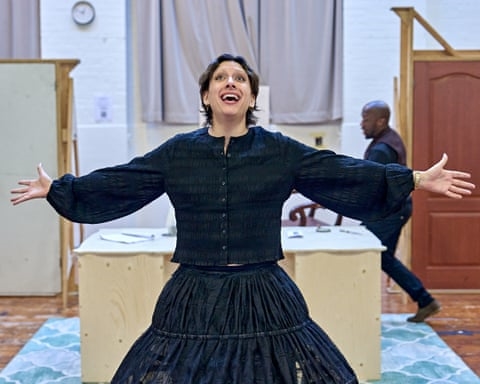
A new theatrical production arriving in London offers a wildly irreverent take on a famous American figure. The play reimagines Mary Todd Lincoln in the fraught final days of her husband’s presidency, portraying her not as a concerned first lady, but as a frustrated, alcohol-fueled force of chaos with a singular dream: to escape the White House and become a cabaret star.
The one-act comedy, which enjoyed a celebrated and extended run in New York, begins its London engagement next week. Its success across the Atlantic, which included major theatrical awards, attracted numerous high-profile audience members and sparked immediate comparisons to other era-defining stage hits.
The show’s creator, who also originated the lead role, has been candid about its loose relationship with historical fact. The concept reportedly began as a private joke, with the explicit goal of creating something “the stupidest, funniest thing possible.” The writer-performer has warned audiences not to use the play as a history lesson, though they have noted that certain anecdotes about the real first lady’s social conduct might accidentally align with the onstage antics.
In London, the role will be taken over by another actor, who describes a deep personal connection to the character’s central conflict. They see Mary as a person bursting with a creative gift, desperately seeking an outlet while feeling trapped by circumstance—a universal feeling, they argue. The actor recalls being instantly captivated when they saw the New York production, phoning a family member immediately after to express their awe and desire to one day perform the part.
Historical scholars have weighed in, with one biographer of Mary Lincoln stating that while accuracy isn’t the play’s goal, any work that re-examines the maligned first lady has value. The professor described the show as a bold, pop-culture satire with a pantomime-like energy, blending modern tropes about the Lincolns into a farcical and entertaining spectacle.
Theatre critics note that British stages have long been a home for explorations of American political history, from musical epics to darker studies. Some suggest the play’s success lies less in its historical setting and more in its expertly crafted absurdity. There is a strong audience appetite, they observe, for intelligent, tightly-written silliness set within a recognizable framework—a form of escapist joy that feels particularly resonant amidst wider global tensions.
The actor playing Mary in London emphasizes this collective need for release, noting the unique power of experiencing such uninhibited comedy live in a theatre with others. Beyond the laughs, the production is also seen as a significant moment for representation. The original performer’s award win was a landmark for non-binary artists, and taking on the role now is described as a “special and powerful” act of visibility for a trans performer in a challenging political climate.
Ultimately, the play presents Mary Todd Lincoln not as a historical footnote to her husband, but as a defiant, messy, and unforgettable character in her own right—a figure whose story, centuries later, is being reclaimed and retold with outrageous humor and contemporary resonance.