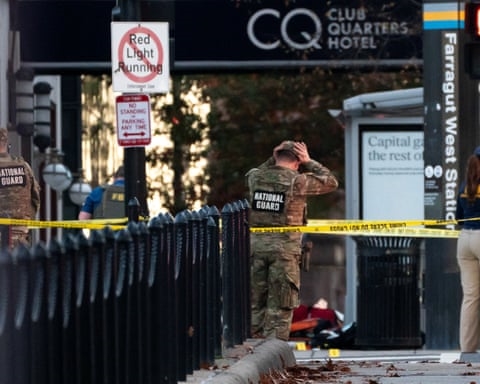
Two members of the National Guard were critically wounded in a shooting Wednesday afternoon in a busy downtown area of Washington D.C., just blocks from the White House. The incident occurred outside the Farragut West Metro station, thrusting the ongoing deployment of military personnel in the capital back into the national spotlight.
The attack has intensified discussions regarding the role of the National Guard in urban settings and is expected to delay any planned drawdown of troops from the city. In response to the violence, an additional 500 Guard members have been ordered to deploy to the capital, extending a mission originally declared as a “crime emergency” earlier this year. That declaration had placed local police under federal oversight and sent thousands of troops to patrol transit hubs and federal properties.
Following the shooting, the focus quickly shifted to the suspect’s background. Authorities confirmed the individual entered the United States from Afghanistan in 2021. This detail was prominently highlighted in subsequent political statements, which tied the event to broader national debates over immigration and law enforcement.
In remarks delivered Wednesday, the President framed the shooting as a consequence of failed border policies, announcing a sweeping review of the status of Afghan nationals in the country. He vowed to ensure the removal of anyone deemed not to “belong here or add benefit to our country,” signaling a potential escalation in immigration enforcement actions.
The deployment of the National Guard to D.C. has been a point of contention since its inception. Critics have described it as an overreach of federal authority and a militarization of city streets. While major protests in the city last month concluded peacefully, some Guard members have expressed frustration with their duties, which have reportedly included tasks like park maintenance and trash collection—a far cry from the disaster relief or community aid missions many expected.
“This is not what we signed up for,” one anonymous Guard member was quoted as saying in a recent media report, capturing a sentiment of disillusionment with the mission’s scope.
The shooting marks the first major violent incident directly involving the deployed Guard personnel. It reignites concerns about safety and political tension in a city already scarred by episodes of violence in recent years, from protests to attacks on diplomatic staff. Security analysts note the event underscores a persistent crisis of gun violence, demonstrating that even heavily secured zones are not immune.
In the wake of the attack, calls for national unity have been met with amplified political rhetoric. Instead of a calming address, the administration’s response has been to leverage the event to advance existing policy agendas, ensuring that the debate over security, immigration, and the role of the military at home will continue to dominate the political landscape.