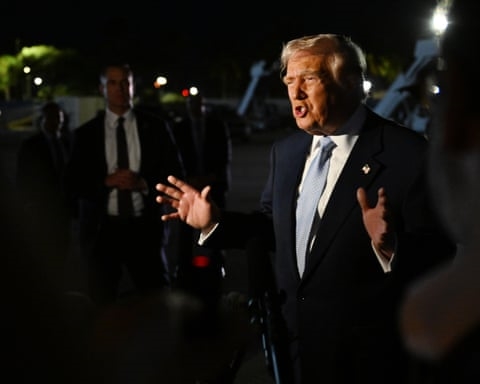
A former U.S. president has repeatedly invoked the threat of license revocation against major television networks over the past eight years, a review of public statements reveals. The latest instance occurred following a contentious exchange with a White House correspondent, during which the former leader suggested a federal agency should cancel the network’s broadcasting privileges.
This marks at least the 28th time such a threat has been issued, according to an analysis of public remarks. The calls for action are consistently linked to allegations of unfair or negative coverage.
However, legal experts and communications officials note a significant disconnect between the rhetoric and regulatory reality. The Federal Communications Commission (FCC) does not grant or revoke licenses for national networks themselves. Its authority extends to the individual local television stations that may be owned by or affiliated with those networks.
A current FCC commissioner recently addressed the threats, stating the commission lacks the power to retaliate against a news network in such a manner. She further clarified that no local station licenses are currently pending renewal, rendering the immediate threat moot.
The former president’s statements often frame the issue around the use of public airwaves. A recurring theme is the argument that networks, perceived as presenting biased or “fake” news, violate the terms of their broadcast privileges and therefore should forfeit them. Specific networks, including ABC, NBC, CBS, and CNN, are frequently named in these critiques.
The commentary escalated notably following certain news interviews and election-related programming, with particular focus on one long-running news magazine. The former president has publicly supported legal action against networks and called upon the FCC to impose maximum penalties, though the practical pathway for license revocation against a national entity remains legally unclear.
This sustained pattern of criticism highlights ongoing tensions between a political figure and major news organizations, centering on accusations of media bias and the boundaries of broadcast regulation.