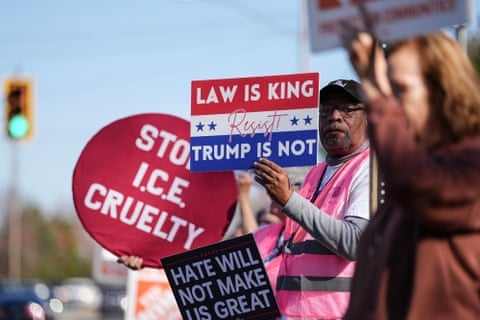
The streets of a major North Carolina city have been transformed into a landscape of fear and defiance. A significant federal immigration enforcement operation, which began over the weekend, has sent shockwaves through the community, leading to widespread business closures, plummeting school attendance, and reports of individuals being detained indiscriminately.
On a central commercial corridor known for its immigrant-owned businesses, a once-bustling bakery now stands shuttered. The owner made the decision to close his doors, not for a holiday, but to protect his staff. His action sparked a chain reaction, with numerous neighboring shops following suit in a collective act of precaution and protest. In the bakery’s parking lot, a makeshift camp has formed, with residents waving signs in a visible stand of solidarity.
The operation, described by federal authorities as a surge in personnel, has led to hundreds of arrests across the state. Officials stated the action is a necessary response to what they call “sanctuary” policies and is aimed at removing threats to public safety. However, accounts from the ground paint a picture of an operation casting a wide and frightening net.
One U.S. citizen, a native of Puerto Rico, reported being detained twice in two days by armed agents. He described being handcuffed and transported blocks away before being released, an experience that left him shaken and fearful. “I felt like I lost my liberty in that moment,” he said, noting that several of his friends have been taken in the raids.
The reach of the enforcement actions has extended beyond streets and businesses into spaces considered community sanctuaries. An after-school program serving children from diverse backgrounds was reportedly approached by federal agents on Monday, prompting the program to suspend all services indefinitely. In a statement, the program’s leadership accused the agencies of having no goal other than to “instill fear” in the immigrant community.
The pervasive anxiety is having a profound impact on daily life. The local public school system, one of the largest in the state, reported a dramatic spike in absences. On a single day, student absenteeism tripled, with many families keeping children home out of fear. One teacher noted that half of her special-needs class was absent, with parents of Hispanic students explicitly citing safety concerns.
“I believe they’re trying to strike fear and intimidate people so that they will be afraid. That’s the only explanation that I have,” said one educator, who expressed hope the tension would ease but worried it could persist.
The economic and social ripple effects are severe. A scheduled international entrepreneurship event was canceled, with organizers citing the safety of attendees. Restaurant owners report supply chain disruptions because delivery drivers, fearful of being stopped, are not working. A small business owner, herself a naturalized citizen, expressed a common sentiment: “I am afraid. What if they stop me? I’m not walking around with my passport.”
Legal advocates are advising clients to remain in their homes and have moved court proceedings online to prevent necessary travel. “It’s really dangerous to be on the road right now,” one attorney stated, explaining that many of his clients are in lawful immigration proceedings but remain vulnerable to detention.
Through the fear, a strong sense of communal unity has emerged. The bakery owner who initiated the closures on his street framed his decision as one of solidarity. “There are no colors here,” he said. “There’s just one community here… They’re not messing with me – they’re messing with all of our immigrant community.”
He vowed to keep his business closed through what is typically his most profitable season until his neighbors feel secure again. “Whatever it takes,” he said, affirming his love for the country. “Good people are always the majority, and we can never lose faith in humanity.”
As the operation continues, the city remains in a state of suspended animation, its normal rhythm replaced by a watchful tension, with a community waiting and wondering when it will feel safe again.