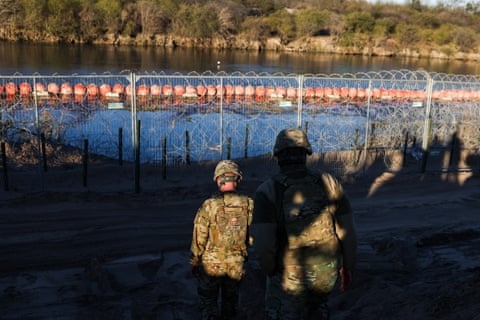
The city of Eagle Pass, Texas, sits on the northern bank of the Rio Grande, a community whose history is inextricably linked to the river that forms the U.S.-Mexico border. In recent years, it found itself at the center of a national crisis, as record numbers of migrants crossed its stretch of the river. That crisis became a pivotal political issue, leading to a dramatic electoral shift in 2024.
For the first time in a century, Maverick County, where Eagle Pass is the seat and which has a Hispanic majority, voted for a Republican presidential candidate. The support for Donald Trump’s border security platform represented a significant political realignment in a region long shaped by cross-border ties.
One year into the subsequent administration, the situation on the ground has transformed. Federal data indicates illegal crossings in the sector have plummeted from thousands per day to a trickle. Local first responders report a steep decline in emergency calls related to river crossings. For many residents, this represents a return to normalcy and a validation of their votes.
“The chaos we saw was unsustainable,” said one longtime resident, who recently ran for local office. “People here felt abandoned. They voted for a solution, even if they weren’t entirely comfortable with the messenger.”
However, the methods employed to achieve this calm have sown doubt and concern among some in the community. A sweeping federal deportation drive has led to operations that have disrupted families nationwide. Meanwhile, the state’s parallel security initiative, Operation Lone Star, has militarized the local landscape with troops, razor wire, and floating barriers.
This physical transformation of the border zone troubles other citizens, who see it as an affront to the river that is part of their heritage. One local business owner, whose family has lived along the Rio Grande for generations, has taken legal action against the state, arguing the infrastructure is an environmental blight.
“This river is our history. It’s being treated like a warzone,” the business owner stated. “Someone has to speak for it.”
The tension in Eagle Pass reflects a broader national dilemma: the conflict between a desire for secure borders and discomfort with the aggressive tactics used to enforce them. The town achieved its immediate goal—a dramatic reduction in illegal crossings—but now grapples with the consequences of how that goal was met. The community’s experience underscores a complex reality where policy outcomes can bring both relief and regret, leaving a border town to navigate the weight of its own political choices.