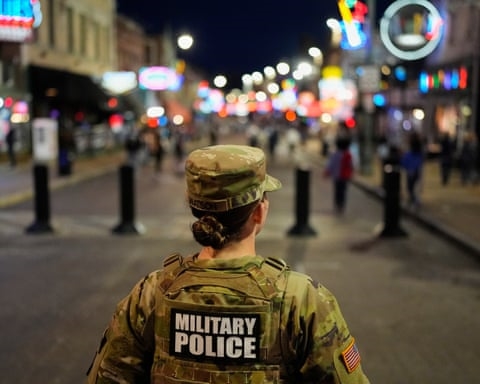
A legal battle over the deployment of National Guard troops to the streets of Memphis reached a state court in Nashville on Monday. The challenge, brought by a coalition of Democratic state and local officials, contests the authority behind the move, initiated by former President Donald Trump and authorized by Tennessee’s governor. Notably absent from the list of plaintiffs is the city of Memphis itself.
The lawsuit, spearheaded by Shelby County Mayor Lee Harris and joined by state legislators and the American Civil Liberties Union (ACLU), seeks an injunction to halt the deployment. They argue the situation in Memphis does not meet the legal threshold of “civil unrest” required to activate the state militia without legislative approval, absent a rebellion or invasion.
However, the city government has chosen not to join the litigation. Memphis Mayor Paul Young stated that after legal review, the city concluded challenging the state and federal authority would be unsuccessful. “Our decision was, let’s figure out how we can impact how they show up in our community,” Young said.
The deployment order followed a September memo from Trump, citing Memphis’s high violent crime rate. While the city’s murder rate is significantly above the national average, the arrival of armed troops to areas like Beale Street has not sparked the widespread protests seen in other cities where similar deployments were proposed.
In court, attorneys for the plaintiffs argued the state’s position sets a dangerous precedent. “The state is arguing that tanks can be sent into any city in this state at any time by the governor… We are all subject to the whims of the governor. That is not how American law is supposed to function,” said Joshua M Salzman, an attorney for the plaintiffs.
State attorneys countered that the deployment is a political and operational decision for the governor, not a matter for the courts. They also contended that the National Guard, funded federally for this mission, is acting as the “army of Tennessee,” not the restricted “militia” cited in state statute—a distinction the plaintiffs call a legal evasion.
Chancery Court Judge Patricia Head Moskal appeared skeptical of the state’s “political question” argument, noting the governor’s decision was an operational response to crime, not a broad policy choice. She has taken the case under advisement.
The troops are part of a broader federal-state “Memphis Safe Task Force,” which officials say has led to over 1,500 arrests since late September. While National Guard members are not authorized to make arrests, other law enforcement agencies involved in the task force have increased enforcement.
Mayor Young, while expressing skepticism that the Guard’s presence will solve the city’s underlying violence, emphasized his focus on steering the task force’s efforts toward executing warrants for the most serious crimes. “The reality is they were going to show up whether I want them here or not,” he said. “I think it’s really important that the mayor of the city… is at the table talking to them about how they show up.”