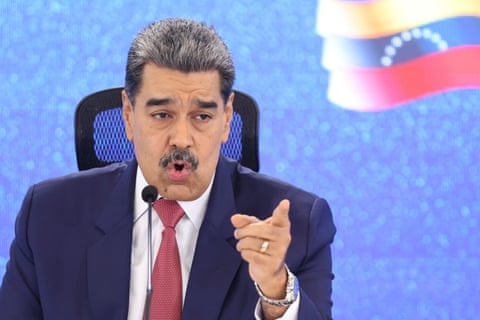
A significant U.S. naval deployment to the Caribbean is drawing comparisons to a troubled history of foreign-backed coups and political assassinations in Latin America. The military movement, authorized by the White House, is openly aimed at destabilizing the government of Venezuelan President Nicolás Maduro.
The operation includes advanced warships and aircraft, described by the Pentagon as a counter-narcotics initiative. However, official statements have pointedly refused to rule out the potential for lethal action against the Venezuelan leadership. A multi-million dollar reward for information leading to Maduro’s capture remains in effect, which analysts interpret as a signal that any attempt to apprehend him would likely be violent.
This strategy evokes several dark chapters in the region’s past. Historical records show U.S. involvement in the overthrow of governments in Guatemala and Chile during the Cold War, as well as multiple plots against Cuban leader Fidel Castro. While the current administration denies seeking assassination, experts note that the practical effect of such intense pressure could be the same.
“When you offer a bounty and surround a country with military force to seize its leader, the line between capture and a fatal confrontation becomes very thin,” said one former intelligence analyst familiar with the region. “The historical precedent here is clear and often bloody.”
The Venezuelan government has denounced the actions as an illegal act of aggression and a threat to national sovereignty. Previous alleged plots against Maduro, including a failed incursion by foreign mercenaries, have been cited by Caracas as evidence of a long-standing campaign to force regime change.
Some observers question the legal and strategic rationale for targeting a sitting head of state, arguing it marks a sharp departure from recent decades of U.S. foreign policy. They contrast the move against Maduro with operations against non-state terrorist figures.
“Pursuing the leader of a sovereign nation sets a profound precedent,” the analyst added. “It is a different calculus entirely from targeting individuals outside the structure of a recognized state.”
Despite the pressure, the prospect of an internal military coup removing Maduro appears uncertain. Reports suggest that external threats have, for now, consolidated support for the government within Venezuela, even among some of its critics. The situation remains volatile, with the massive U.S. military presence serving as a stark reminder of an era many in the region hoped had passed.