The economic landscape in Argentina remains profoundly challenging for a majority of its citizens, despite recent government efforts to stabilize the nation’s finances. A stark reality is emerging where many households find their incomes insufficient to cover basic needs, even as some macroeconomic indicators show tentative signs of improvement.
Consider the case of one Buenos Aires resident, a delivery driver in his early thirties. He works extensive hours every day of the week, yet he and his family are being forced to leave their rented home and move in with relatives, as rising costs outpace his earnings. “The situation is difficult,” he explains, citing the growing needs of his children and relentless price increases. Despite these personal hardships, he recently supported the governing party in legislative elections, expressing a belief that the previous political establishment had failed the country and that the current administration requires more time to enact its program.
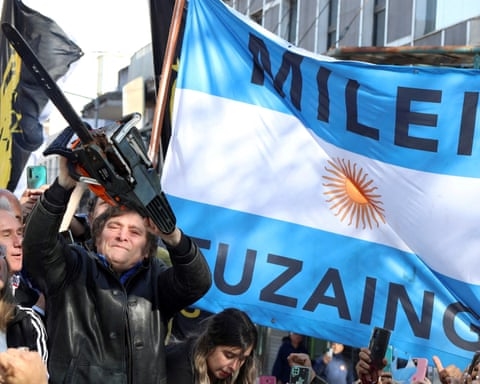
This sentiment reflects a complex national mood. The government, led by President Javier Milei, implemented a severe austerity program upon taking office, characterized by deep public spending cuts, a significant currency devaluation, and the removal of various subsidies and price controls. The stated goal was to eliminate the fiscal deficit and curb hyperinflation.
On one front, the policy has yielded results: the annual inflation rate, which once soared above 200%, has been reduced to approximately 32%. However, this gain has come at a substantial social cost. Real wages and purchasing power have plummeted, pushing poverty rates to historically high levels before a recent modest decline. The contraction in domestic demand is felt across industries.
Business owners report a dramatic slowdown in consumer activity. A shopkeeper in Buenos Aires noted that foot traffic in his store virtually vanishes by the middle of the month, as customers exhaust their salaries. “The middle class has evaporated; now you are either poor or rich,” he observed, expressing regret for his past electoral support. To adapt, many entrepreneurs are diversifying their offerings in a struggle to maintain sales.
The industrial sector faces a dual crisis. On one hand, weakened domestic consumption has reduced demand for local goods. On the other, trade liberalization policies and a currency that many analysts consider artificially strong have made imported products more competitive, further squeezing domestic manufacturers. The textile industry, for instance, reports the loss of hundreds of companies and thousands of formal jobs. Similar pressures are affecting iconic sectors like winemaking, where both domestic sales and exports have fallen significantly.
The erosion of formal employment has led to a surge in informal work. Experts estimate that informal workers now constitute over 40% of the labor force, with half of them failing to earn a subsistence income. Overall, hundreds of thousands of formal jobs have been lost since the austerity measures began, primarily in construction and manufacturing, accompanied by the closure of thousands of businesses.
Nevertheless, in the recent midterm elections, the governing party secured a decisive victory, expanding its legislative influence by forming a bloc with other right-leaning parties. Analysts suggest this outcome was driven not by an improvement in living standards, but by a combination of factors: a stabilized exchange rate, contained inflation, widespread disillusionment with the opposition, and concerns over jeopardizing international financial support.
The governing coalition, while strengthened, still lacks an outright majority in congress, which will necessitate negotiations to advance promised reforms to labor, tax, and pension systems. For supporters like the delivery driver, the path forward requires patience. “He can’t fix an economy that was damaged for years overnight,” he argues, pushing back against critics who expected rapid transformation.
The Argentine experience underscores a painful economic transition, where macroeconomic adjustments have yet to translate into broad-based relief, leaving a nation grappling with diminished livelihoods and an uncertain future.