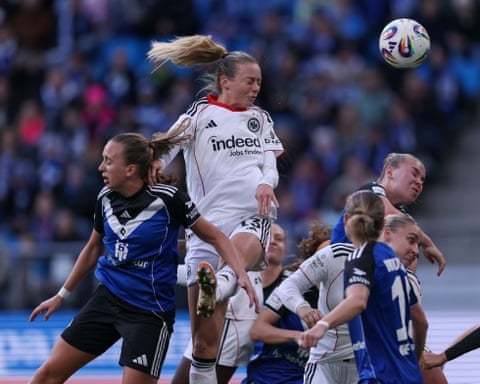
In a decisive move to reclaim its competitive edge, Germany’s top women’s football clubs are taking control of their own destiny. The 14 clubs of the Frauen-Bundesliga have unanimously agreed to form an independent league association, severing operational control from the German Football Federation (DFB). This strategic shift, targeting full implementation for the 2027-28 season, is a direct response to the rapid ascent of leagues like England’s Women’s Super League (WSL).
Driving this change is a palpable concern among club executives. “We initiated this process from a fear of progressively losing touch with the elite level,” stated Katharina Kiel, head of women’s football at Eintracht Frankfurt and the newly elected president of the Women’s Bundesliga Association. She, along with other key figures, points to a period where German football, despite its historic successes, failed to capitalize commercially, allowing other nations to surge ahead.
The model draws clear inspiration from the WSL’s independent structure, which is credited with accelerating growth in England. The core objectives for the new German entity are twofold: to unlock greater commercial revenue, particularly from sponsorships and media rights, and to grant clubs the autonomy to set their own standards on issues like minimum salaries and infrastructure.
Bianca Rech, a director at Bayern Munich, emphasized the need for self-determination. “As part of the DFB, we had no real power; if they decided something, we had to agree,” she explained. “It’s crucial we establish our own rules now.” The clubs have conducted extensive research, even consulting with agencies in England, to blueprint a more competitive and self-sustaining league.
Acknowledging past missed opportunities, such as after the 2011 World Cup win, officials see the upcoming 2029 UEFA Women’s European Championship in Germany as a pivotal moment to galvanize the sport. However, they stress a methodical approach. The timeline is set to use the coming seasons to build a robust organization capable of supporting the clubs economically before the new cycle begins.
While admitting the Frauen-Bundesliga has “fallen behind” the commercial pace of the WSL, there is strong optimism that this structural overhaul can reignite German women’s football. With historic clubs like Borussia Dortmund on the rise and a strong pipeline of youth talent for the national team, the foundation for a resurgence exists.
“The most important thing is the product on the pitch,” Kiel concluded. “We want an attractive game, and everything around it must align to support that.” Negotiations with the DFB regarding the transition and future cooperation are ongoing, marking the start of a new, ambitious chapter for the league.