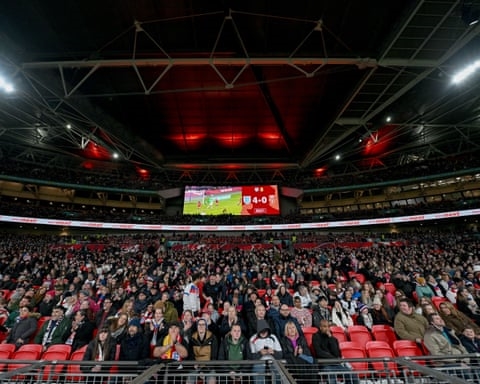
The roar of the crowd is a defining feature of England women’s football, with attendance figures that are the global benchmark. Yet, a persistent puzzle lies within these impressive numbers: a noticeable gap between tickets sold and the actual number of fans in the stands.
This phenomenon was particularly visible during the Lionesses’ 2025 home fixtures. Across eight matches, including high-profile games at Wembley, nearly 48,000 purchased tickets went unused. While empty seats at a declared sell-out can draw criticism, the situation is more nuanced than it first appears.
In many ways, the team is a casualty of its own soaring popularity. Since the landmark 2022 European Championship victory, expectations have been reset. The current average attendance for England home games comfortably exceeds 37,000, a figure that dwarfs the crowds seen for many other top women’s national teams. For context, the United States women’s team, Olympic champions in 2024, averaged fewer than 20,000 spectators across their home matches that year.
The discrepancy is not unique to women’s football; similar gaps are recorded in the men’s game. Several factors specific to the Lionesses’ ticketing strategy contribute to the trend. To achieve these large crowds, tickets are often put on sale months in advance, capitalising on post-tournament enthusiasm or holiday gift-buying periods. This long lead time inevitably leads to some plans changing, with clashes with rescheduled men’s fixtures, travel disruptions, or poor weather causing last-minute drop-offs.
Furthermore, the deliberate policy of affordable pricing—a family of four could attend for as little as £40—while crucial for accessibility during a cost-of-living crisis, may also mean some ticket-holders feel less financial pressure to attend if circumstances shift. The absence of a formal, integrated resale platform for England women’s matches means unused tickets have no easy route back to eager fans.
The football authorities acknowledge the challenge. A dedicated cross-departmental group is reportedly examining the ticketing lifecycle, from initial sales strategy to fan engagement, seeking a balance between maximising accessibility and ensuring seats are filled. The ongoing dialogue with supporter groups is considered vital to this process.
Ultimately, the very existence of this “no-show” issue underscores a remarkable success story: the unprecedented and sustained public demand for women’s international football in England. While optimising attendance remains a complex, evolving goal, the foundational achievement—consistently drawing tens of thousands—is a testament to the team’s resonance with the nation. The empty seats represent not failure, but a growing pain of a sport that has rapidly outgrown its former confines.