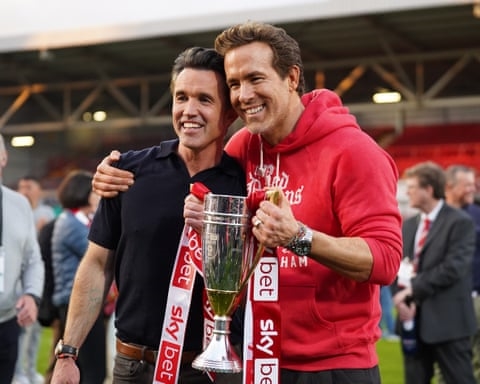
Wrexham AFC, the football club famously revitalized by actors Ryan Reynolds and Rob McElhenney, has announced a significant new financial partnership. The club has sold a minority stake to Apollo Sports Capital, the investment arm of the prominent US private equity group Apollo Global Management.
The deal will provide capital to support the redevelopment of the club’s historic Racecourse Ground. Reynolds and McElhenney will retain majority ownership and control of the club, which has achieved consecutive promotions to the Championship under their stewardship. The investment from Apollo, a firm managing assets worth hundreds of billions of dollars, marks a major vote of confidence in the club’s commercial potential and its ambitious plans for future growth.
This development arrives shortly after the club’s financial position was bolstered by substantial government support. Public records indicate Wrexham AFC recently received approximately £18 million in non-repayable grants from Welsh authorities. Officials stated the funding was essential for stadium upgrades aimed at hosting international matches, a project described as commercially unviable without state aid.
The simultaneous arrival of significant private investment has prompted questions from industry observers. Some analysts note that attracting a global investor like Apollo appears to contradict earlier assertions that private sector interest in the stadium project was lacking.
In a joint statement, the club’s Hollywood owners reaffirmed their long-term commitment, stating their dream remains to reach the Premier League while honoring the club’s community roots. A representative for Apollo expressed enthusiasm about joining Wrexham’s “incredible journey” and contributing to the club’s goals and local economic revitalization.
The investment underscores the remarkable transformation of the once-struggling club into a globally recognized brand, fueled by its on-field success and a popular documentary series. It also sets the stage for the next phase of Wrexham’s push for higher competition, even as it renews debate over the blend of public funding and private capital in modern football.