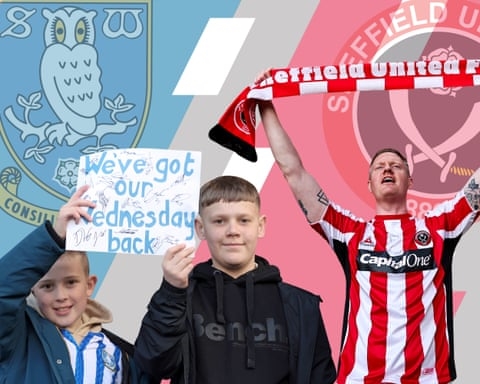
This Sunday, the eyes of English football will turn to a fixture steeped in passion and history, even as its two protagonists find themselves in unusually dire straits. Sheffield Wednesday and Sheffield United, the Championship’s famed Steel City rivals, occupy places in the division’s bottom three. Yet, around the city, the build-up is less about dread and more a testament to enduring pride, dark humour, and a deep-seated belief in better days.
At Hillsborough, work is underway to prepare the stadium. Volunteers recently removed hundreds of seats from the North Stand that once spelled out the name of the former owner, a symbolic act for a club emerging from a turbulent period. The club’s entry into administration last month, paradoxically, reignited supporter engagement, with fans returning to the club shop in significant numbers.
The city’s football identity, however, stretches far beyond these two clubs. It is a place of foundational firsts. Local sides like Hallam FC, who play at the world’s oldest football ground, and Sheffield FC, recognised globally as the oldest existing club, are custodians of that legacy. This summer, Hallam won the Youdan Cup—football’s oldest trophy, dating to 1867—in a penalty shootout, an event that drew international visitors.
There is a growing sentiment that Sheffield should champion this heritage more boldly. Civic leaders point to a renewed confidence in the city, with its football story being a core part of that narrative. Initiatives like installing blue plaques for local legends and developing community football hubs are steps in that direction.
Local observers note a distinct character in the city’s support, often traced to its industrial past. As one lifelong fan put it, while port cities like Liverpool and Manchester had to be outwardly persuasive, Sheffield’s reputation was built on making the world’s best steel—a product people had to come to them for. This, he suggests, fostered an inward-looking pride.
That pride manifests differently across the divide. Wednesdayites, despite a long absence from the top flight and a dismal recent record in the derby, often carry a sense of inherent stature, a belief the club belongs among the nation’s elite. United supporters, by contrast, are frequently characterised by a wry, ingrained pessimism, a readiness to expect the worst even in moments of success.
On the pitch, the context is undeniably grim. United’s season has been a story of turmoil, culminating in a relegation scrap. Wednesday, starting on minus four points due to their financial penalties, are a club in transition, with administrators fielding multiple bids and speaking of its “sleeping giant” potential. The administrator pointed to the returning fans as the club’s greatest asset, noting a sell-out crowd for this match proves the strength of the brand.
For all the fierce rivalry and mutual ribbing—where the term “pigs” is commonly, if obscurely, exchanged—there remains a profound shared experience. Fans of both clubs mix in workplaces and pubs across the city, sustaining a continuous dialogue. They share a respect for certain figures in the game and a collective understanding of what constitutes unacceptable conduct off the pitch.
In an increasingly fragmented world, this football culture offers something vital: a rare, irrational, and freeing sense of community. As one publican and fan remarked, supporting his team provides a space for connection and identity that everyday life often lacks. However the match finishes on Sunday, that culture, forged in steel and history, will endure long after the final whistle.