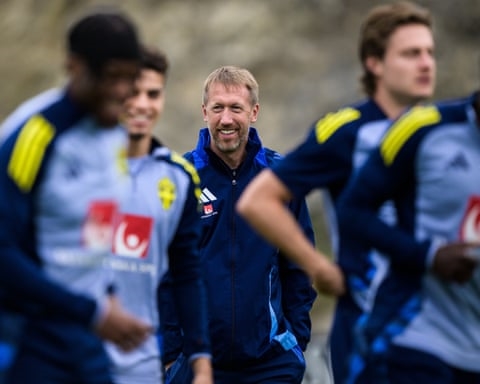
A familiar tactical blueprint has been laid out as the new era for Swedish football begins. The appointment of Graham Potter as national team manager has been met with a sense of relief and anticipation, seen as a move to restore clarity and unity to a squad that has lost its way. The immediate task is formidable: reigniting a faltering World Cup qualifying campaign with a squad brimming with individual talent but lacking recent cohesion.
For Potter, the opportunity represents a timely homecoming. Having made his managerial reputation in Sweden during a transformative seven-year spell with Östersund, his return to Scandinavian football follows a challenging period in the Premier League. The swiftness of his appointment, initially on a contract running through March, underscores a mutual need. The Swedish Football Association gains a coach deeply familiar with its football culture, while Potter secures a high-profile platform to rebuild his own standing on the international stage.
The challenge is immediate and stark. Sweden finds itself at the bottom of its qualifying group with a solitary point, requiring a significant turnaround in its final matches. The safety net of a playoff spot in March, earned via the Nations League, offers some breathing room, but the primary objective is to salvage automatic qualification. This mission begins with a crucial away fixture against Switzerland, a team that comfortably defeated Sweden just weeks ago.
Potter inherits a squad that, on paper, possesses enviable attacking riches. The likes of Alexander Isak, Viktor Gyökeres, and Dejan Kulusevski represent a generation of talent that has promised much. However, his predecessor, Jon Dahl Tomasson, struggled to forge them into a balanced and resilient unit, with recent performances characterized by defensive vulnerability. Potter’s initial focus appears to be less on tactical revolution and more on re-establishing a collective identity—the famed Swedish spirit of resilience and collective effort that has defined the nation’s best teams.
Injuries complicate his first team selection. Key players including Kulusevski, Gyökeres, and the promising Lucas Bergvall are unavailable, while captain Victor Lindelöf is also sidelined. The fitness of star striker Alexander Isak remains a concern, with Potter indicating he will likely be used from the substitutes’ bench to manage a persistent groin issue.
Beyond tactics and team sheets, Potter has moved quickly to address the squad’s morale. During a training camp in Spain, he initiated exercises designed to foster openness and connection among the players, encouraging them to share personal stories of influential figures in their careers. Early indications suggest this approach has been well received. Furthermore, his decision to conduct media duties in Swedish—a language he learned during his previous tenure—has been noted as a symbolic and practical step to bridge any gap between the team and its supporters.
The coming days represent a critical juncture. For Sweden, it is about rediscovering its competitive edge and reconnecting with a proud footballing identity. For Graham Potter, it is a chance to reaffirm his coaching philosophy on a major stage. Success would not only propel Sweden toward the 2026 World Cup but also mark a significant redemption for a manager now back in an environment where he first flourished. The foundation is being rebuilt, starting with a return to core principles, as a nation and its new leader seek a shared path forward.