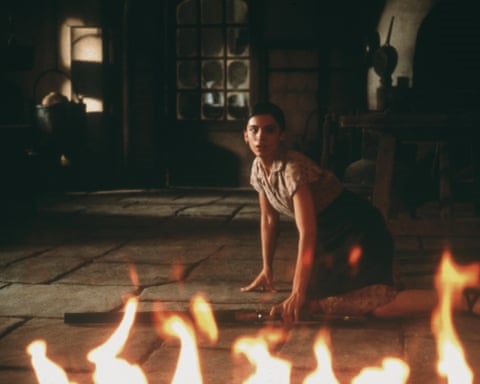
Long before he became a celebrated auteur, a director crafted a film that remains one of his most potent and emotionally resonant works. Released over two decades ago, this gothic tale set against the backdrop of the Spanish Civil War is a masterful blend of spectral horror and poignant human drama.
The story unfolds in a remote boys’ orphanage, a crumbling refuge for children left adrift by the conflict. Into this uneasy sanctuary arrives a new boy, who must navigate a world that is both strangely surreal and brutally real. An unexploded bomb sits embedded in the central courtyard, a constant, silent threat. The adults who run the home are a mixed lot, ranging from the compassionate to the cruel, while the children have their own harsh hierarchies.
Yet, the most unsettling presence is not among the living. A ghostly boy haunts the shadowy corridors and damp cellars, a silent specter whose tragic story is a closely guarded secret. The film builds a profound sense of dread not just through these supernatural visitations—enhanced by striking, atmospheric visuals—but through the palpable dangers posed by the living. The real horror stems from adult failings, hidden agendas, and the pervasive violence of a war that encroaches upon the children’s fragile world.
What elevates the narrative is its seamless weaving of the political and the paranormal. The ghost becomes a manifestation of historical trauma, and the children’s plight reflects a nation’s fracture. The young cast delivers remarkably authentic performances, portraying childhood with a clear-eyed lack of sentimentality. The result is a richly layered, deeply moving, and supremely satisfying story that confirms its creator’s unique vision was fully formed from the very start.