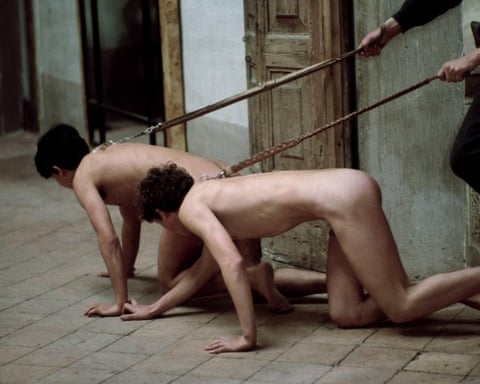
Half a century after its creation, Pier Paolo Pasolini’s final film, Salò, or the 120 Days of Sodom, continues to provoke, challenge, and haunt those who encounter it. Its notorious reputation for depicting extreme cruelty and violence is undiminished, yet for many filmmakers and cinephiles, it stands as a vital and enduring work of art.
The experience of first viewing the film is often a defining moment. One director recalls attending its American premiere, where the audience dwindled significantly by the film’s end. For that viewer, the impact was immediate and profound, cementing Pasolini’s status as a seminal figure. Another renowned filmmaker admits to an initial aversion, suggesting the film requires a particular readiness from its audience, arriving only when one is prepared to grapple with its depths.
The production of Salò presented a stark contrast to its bleak content. Accounts from the set describe an almost lighthearted atmosphere, with a young cast and a director who preferred spontaneous, unrehearsed moments. Pasolini himself spoke of crafting a deliberately enigmatic work, one where ambiguity was not a flaw but an essential characteristic.
Upon its release, the film ignited immediate controversy, facing severe censorship and bans in multiple countries, including Italy and the United Kingdom. It was denounced as indecent, with screenings halted and versions heavily cut. It would take decades for the film to be widely available in its complete form, following shifts in cultural attitudes and classification standards.
Today, however, Pasolini’s work is experiencing a notable resurgence. His influence is seen in contemporary projects, from biographical films exploring his life to modern reinterpretations of his earlier works that transpose their themes into new political contexts. The political core of Salò—its explicit parallel of libertine excess with fascist power structures—is frequently cited as a masterstroke, though some interpreters find its power in a more universal, philosophical exploration of human fear and desire.
The tragic and unresolved nature of Pasolini’s death in 1975 inevitably shadows his legacy. The brutal circumstances—a violent assault that many believe was more than a random act—remain shrouded in mystery and conspiracy theories, adding a layer of poignant loss to his body of work. His death cut short numerous ambitious projects, leaving behind the ghost of potential unfulfilled.
Yet, it is the work itself that endures. For many, revisiting Salò is a recurring revelation; its power to disturb and provoke thought seems to grow rather than diminish with time. While its shocking imagery is often the initial point of discussion, its lasting significance lies far deeper. The film transcends mere provocation, offering a complex, unsettling, and perpetually relevant critique of power, corruption, and the human condition. This enduring potency ensures that Pasolini’s challenging gift to cinema will continue to be unpacked by audiences for generations to come.